Krakow shooting suspect dies in hospital after killing six people
The 24-year-old gunman behind the deadly Kraków shooting rampage died in the hospital following a shootout with police, bringing the total death toll to nine.
Krakow shooting suspect dies in hospital after killing six people
The 24-year-old Polish man suspected of carrying out a deadly shooting rampage in Kraków died in the hospital on Monday morning after undergoing multiple surgeries for gunshot wounds sustained in a shootout with police. Before the suspect passed away, investigators discovered the bodies of his parents and sister at their family home, bringing the total death toll linked to the suspect to nine people.
That death extinguishes the possibility of a direct criminal trial, leaving prosecutors to rely entirely on an ongoing terrorism investigation to piece together the sequence of events. Justice Minister Waldemar Zurek said on Monday that despite the death of the shooter, the investigation would continue, aiming to establish whether he acted alone or was inspired by any group. Evidence is being collected, but I will not show or disclose it. I ask for restraint,
Mr. Zurek told Radio Zet.
How the attack unfolded in the historic city square
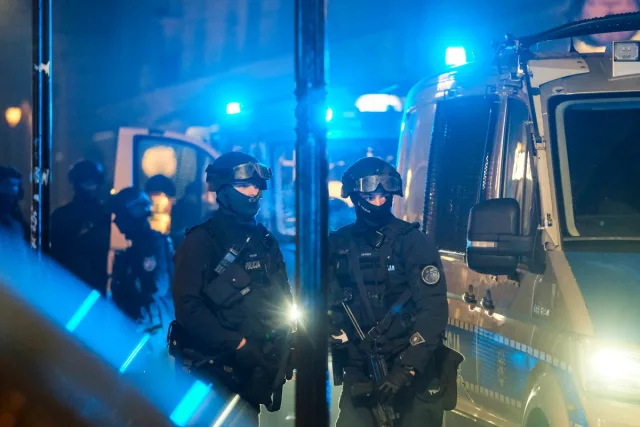
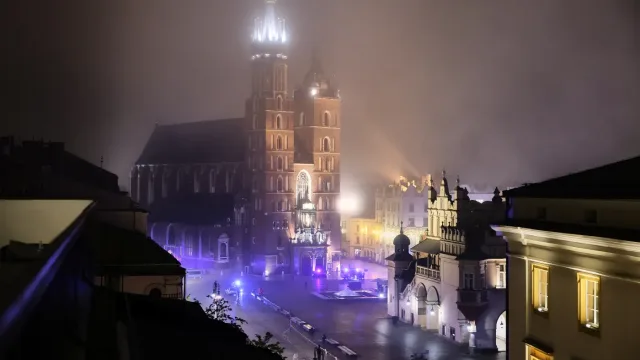
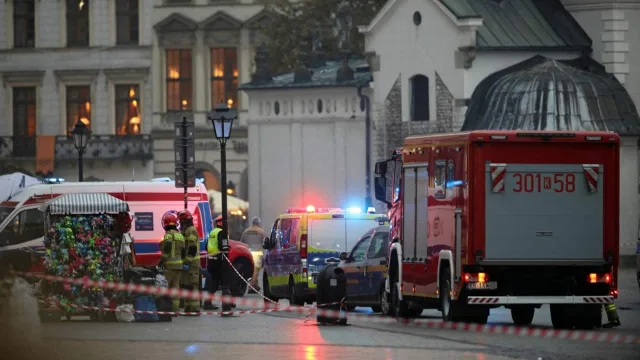
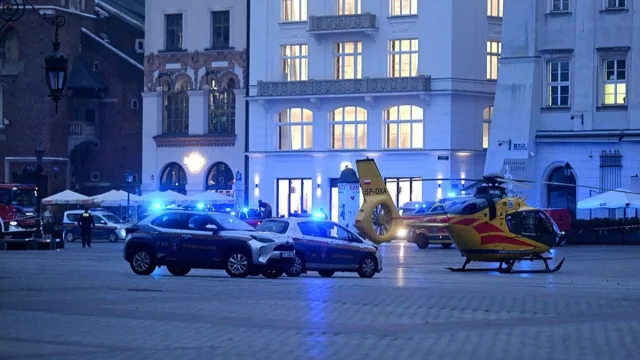
The violence began at around 3 p.m. on Saturday, November 7, when the assailant arrived by car at Kraków’s Main Market Square, a historic center and major tourist destination in Poland's second-largest city. Dressed in military clothing and a bulletproof vest, the shooter used an automatic weapon to fire randomly at people in the bustling public area before continuing to drive through the Old Town.
Authorities quickly designated the attack as a terrorist offense. Justice Minister Waldemar Żurek stated on X that the gunman acted with the aim of seriously intimidating a large number of people, making this a terrorist offence, a classification reiterated by Polish prosecutors on Sunday. Prime Minister Donald Tusk called the shooting the deadliest in the country since the end of communism in 1989.
Interior Minister Marcin Kierwiński noted at a news conference that the attacker was fascinated by far-right ideologies and held very radical, ultranationalistic views. Police recovered four firearms either from the attacker or his car at the scene in Kraków. Malopolska regional governor Krzysztof Jan Klęczar stated that the attacker's father legally owned more than 10 guns, and local officials reported that seven weapons were ultimately seized from the family home, bringing the total number of recovered firearms to 11.
The government had identified the assailant as Michal O, a 24-year-old from the town of Ostrowiec Swietokrzyski in south-eastern Poland. However, the incident sparked a bitter political dispute over his motives, with Poland's nationalist opposition criticising the government's statement about far-right ideology. Law & Justice party leader Jaroslaw Kaczynski said the claims were a blatant lie.
On Monday, government officials appeared to walk back from the initial comments. Until the matter is fully clarified and the authorities are in possession of complete information, it is best to refrain from making comments, even if there are some initial indications,
government spokesperson Adam Szlapka told local news. An interior ministry spokesperson said earlier on Monday there were many different emblems on the perpetrator's clothing that had already been partially examined and interpreted.
Mass shootings remain rare in Poland, a nation of 37 million people where approximately 411,000 individuals hold gun permits, though interest in gun ownership has been rising. The city of Kraków receives 15 million visitors a year, most of whom pass through the main square where the tragedy unfolded.
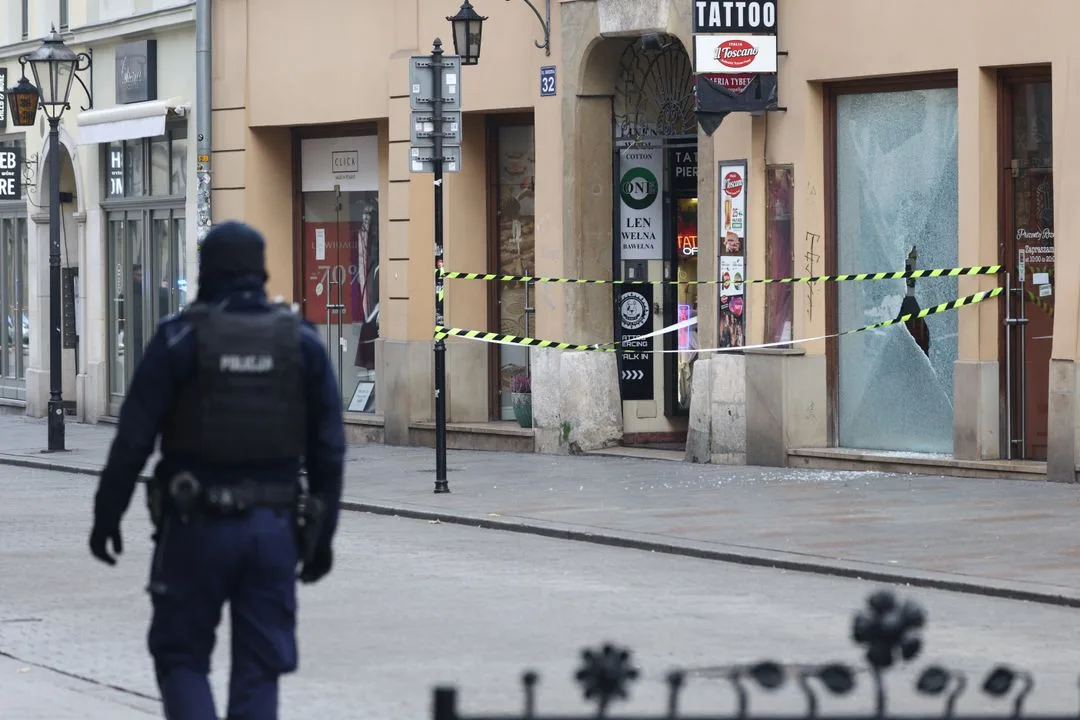
That means the attack pierced a deep sense of everyday safety in a country largely unaccustomed to such mass violence, instantly transforming a major commercial and tourist hub into a cordoned-off crime scene marked by bullet holes and makeshift memorials.
Victims, family home discoveries, and the wounded
The shooting left six people dead in the square: four women and two men. Regional governor Krzysztof Jan Klęczar identified four of the deceased Polish citizens as three women aged 47, 53, and 61, and a 50-year-old man. A 32-year-old British man and a woman from Austria were also among those killed.
Up to 16 others were initially injured during the rampage, with recent updates placing the injured count at 15, including foreign nationals from Britain, Portugal, Russia, Germany, and Austria. Of the 15 injured, 14 remain in hospital in a stable condition. Hours after the initial attack, police made a grim discovery at the suspect's family home in Ostrowiec Świętokrzyski, a city about 150 kilometers (93 miles) northeast of Kraków. Authorities found the bodies of the suspect's 53-year-old father, 52-year-old mother, and 21-year-old sister, who likely died from gunshot wounds.
The suspect's sister was identified as Magdalena Oksińska, a 21-year-old artist and third-year student at the Jan Matejko Academy of Fine Arts in Kraków. Professor Andrzej Bednarczyk, the academy's rector, released a statement saying, We are filled with grief and a sense of irreparable loss. We bid farewell to Magda, a young artist and a member of our academic community whose life was tragically cut short. Her death leaves a painful void among us. Architect Pavko Krajka added on social media that she was a talented painter, photographer, poet, and writer, calling her death a great loss for culture.
The two police officers who intervened and stopped the gunman were hailed as true heroes by authorities after engaging in an exchange of fire that wounded the attacker. A video posted on social media showed a police officer repeatedly shooting the attacker, who was lying on the street, before the officer slowly collapsed to the ground. Both officers were hospitalized in serious condition, with one having been shot three times. By Sunday afternoon, both officers were conscious, and one had emerged from a coma. One police officer who assisted in apprehending the shooter remains in a serious condition, according to Krakow Province Governor Krzysztof Kleczar. Two surgeons eating nearby, Michał Pędziwiatr and Mateusz Wierdak, rushed in to help. Mateusz Wierdak took care of the officer who subdued the attacker because he truly needed urgent help, Michał Pędziwiatr told the Polish news website Onet, adding that his colleague stopped the bleeding in the officer's chest and probably saved his life.
That shows how spontaneous civilian and medical intervention prevented an even higher casualty count, though the psychological toll on the historic community remains immense.
Political fallout and the announced gun permit review
In the wake of the tragedy, Poland entered two days of national mourning on November 8 and 9. Kraków's Mayor Łukasz Gibała had said the city would be in official mourning until Wednesday, while emphasizing that the city would stay open to visitors. In a video posted on X, Mayor Gibała urged residents to stay united, stating, Let us not allow these events to be exploited by someone who would like to divide us. The square will belong to us all again. On Sunday afternoon, St. Anne’s Church hosted a memorial service, and locals soon returned to the main square to lay candles and flowers alongside bullet holes. The square reopened on Sunday evening, with mourners gathering to lay flowers and candles in honour of the victims.
Responding to the tragedy, Justice Minister Waldemar Zurek announced that the Polish government will review regulations on requirements for people with gun permits. Both the shooter and his father had gun permits, and several firearms were found in the family apartment and the assailant's car, prosecutors said.
Yet the shooting struck a deeply divided nation already facing a tense political week. The country is navigating a high-stakes constitutional crisis surrounding judicial appointments and upcoming demonstrations, including Wednesday's annual Independence March. Political analysts warn that the tragedy risks deepening societal polarization. Political scientist Ewa Marciniak from Warsaw University noted that such tragedies are frequently exploited for political gain as leaders search for responsible parties amid mutual hostility. Writing in the weekly Rzeczpospolita, leading writer Boguslaw Chrabota argued that the radicalization of political discourse gives rise to Polish Breiviks, comparing the Kraków event to the 2011 Norway attacks.
That leaves the government and opposition navigating a volatile landscape where shared mourning contends with entrenched political friction ahead of parliamentary elections scheduled for autumn 2027.
Amid the broader political fallout, the right-wing opposition party Law and Justice (PiS), which governed from 2015 to 2023, called off planned protests for the weekend following the shooting.
Updated 1 time since publication; last update 10 November 2026, 15:44.