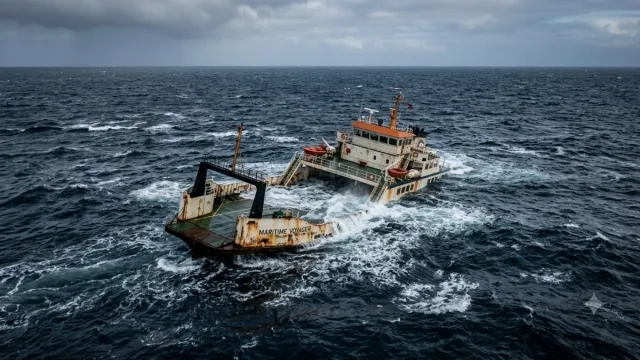
Iran to announce restricted maritime zone outside Strait of Hormuz
Iran is set to establish a restricted maritime zone and a new international corridor managed with Oman to challenge the U.S. naval blockade.
The Iranian government has announced plans to establish a restricted maritime zone outside the Strait of Hormuz, a move that could heighten regional tensions and affect maritime traffic. The declaration, made by Supreme National Security Council Secretary Mohsen Rezaei, is a notable escalation in Iran’s strategy to counter U.S. pressure and assert control over the strategic waterway.
Iran’s Restricted Maritime Zone Details
The restricted zone, according to Rezaei, will extend from the line where the U.S. naval blockade begins to the Strait of Hormuz region and into the Persian Gulf on the other side of the strait. This area, he stated, will be enforced to prevent vessels from transiting without coordination with Iran. The zone is expected to be announced in the coming days, with Rezaei emphasizing that it is part of a broader strategic shift to increase pressure on the United States.
Rezaei framed the move as a response to what he described as the U.S. failure to fulfill obligations under a peace memorandum of understanding signed between Tehran and Washington in June. He dismissed U.S. claims that ships and oil tankers are crossing the Strait of Hormuz as a “lie,” while acknowledging that some vessels attempt to evade detection by switching off navigation systems and using routes near Oman. However, he stated that most of these ships “receive blows,” though Iran has no immediate plans to sink them due to environmental concerns.
Sanctions and Implications
Ships entering the restricted zone without coordination with Iran will face sanctions that could affect their insurance coverage and future passage through the waterway. Rezaei highlighted that the sanctions list will include any vessel attempting to transit the area, with the goal of deterring unauthorized movement. He emphasized that the zone’s implementation is tied to the U.S. fulfilling its commitments under the June peace memorandum, stating that the Strait of Hormuz will remain closed unless Washington takes “practical steps” to address the situation.
The announcement comes amid heightened tensions following U.S. strikes on Iranian oil tankers in retaliation for Iran’s recent ballistic missile attacks on U.S. warships. The U.S. has denied claims that Iran struck an uncrewed military vessel in the Strait of Hormuz, calling the assertion a “total lie.” This denial underscores the ongoing disputes over maritime security and the potential for further escalation.
Military Posturing and Missile Test
Iran’s military posture has also been highlighted by Rezaei, who revealed that the country test-fired a domestically developed anti-destroyer missile above a U.S. aircraft carrier 48 hours prior to the announcement. He described the missile as a warning that the U.S. naval blockade is vulnerable, stating, “The special missile created a hell for the Americans, and they fled.” This test underscores Iran’s growing military capabilities and its willingness to challenge U.S. naval dominance in the region.
The missile test coincides with a broader pattern of Iranian military activity, including recent strikes on U.S. and Israeli targets. These actions have been met with retaliatory measures from the U.S., including the targeting of Iranian oil tankers. The cycle of escalation raises concerns about the potential for further conflict, particularly as both sides continue to assert their positions in the region.
New International Corridor Plan
In addition to the restricted zone, Rezaei announced plans to establish a new international corridor for passage through the Strait of Hormuz, to be managed by Iran and Oman. This corridor, he stated, would be announced in the coming days and is intended to provide an alternative route for ships seeking to navigate the strait. However, the corridor’s management by Iran raises questions about its neutrality and the potential for further restrictions on maritime traffic.
The announcement of the corridor follows U.S.-led strikes on Iran in February, which led to the restriction of passage through the Strait of Hormuz. At the same time, the U.S. has imposed a naval blockade targeting vessels traveling to or from Iranian ports and coastal areas. This dual approach by both sides has created a complex and volatile environment in the region.
Context of US-Iran Tensions
The restricted zone announcement is part of a broader context of deteriorating U.S.-Iran relations, marked by a series of attacks and counterattacks. Since the February strikes, tensions have remained high, with both sides engaging in a cycle of military and economic pressure. The June peace memorandum, while intended to de-escalate tensions, has not prevented further hostilities, as both sides continue to pursue strategic objectives.
Rezaei’s comments reflect Iran’s determination to assert its influence in the region and challenge U.S. hegemony. The restricted zone and new corridor plan are seen as tools to exert pressure on the U.S. and its allies, while also securing Iran’s strategic interests. However, the potential for unintended consequences, including disruptions to global oil supplies and increased regional instability, remains a significant concern.
Frequently Asked Questions
What is the restricted maritime zone, and where is it located?
The restricted maritime zone, announced by Iran, extends from the line where the U.S. naval blockade begins to the Strait of Hormuz region and into the Persian Gulf on the other side of the strait. It is designed to control maritime traffic and pressure the U.S. to fulfill its obligations under a peace memorandum.
What sanctions will ships face if they enter the zone?
Ships entering the restricted zone without coordination with Iran will face sanctions that affect their insurance coverage and future passage through the waterway. These sanctions are part of Iran’s strategy to deter unauthorized movement and assert control over the strait.
The next key development will be the official announcement of the restricted zone and the new international corridor, which is expected to be revealed in the coming days. The situation remains fluid, with the potential for further escalations as both Iran and the U.S. continue to assert their positions in the region. The international community will be closely monitoring the impact of these developments on global shipping and regional stability.
Dateline Wire is dedicated to independent, evidence-backed reporting. This briefing was synthesized from primary source reporting, corroborated across independent newsrooms, and verified against our Editorial Standards.