Attacks on Saudi airports kill 3 people, as fighting escalates in Yemen
Houthi attacks on two Saudi airports resulted in three deaths and 36 injuries, triggering a retaliatory air campaign against military sites across Yemen. The fighting remains linked to wider regional tensions and the ongoing conflict between Houthi forces and Saudi-backed government troops.
- Headline: Attacks on Saudi airports kill 3 people, as fighting escalates in Yemen
- Dispatch Summary: Houthi attacks on two Saudi airports resulted in three deaths and 36 injuries, triggering a retaliatory air campaign against military sites across Yemen. The fighting remains linked to wider regional tensions and the ongoing conflict between Houthi forces and Saudi-backed government troops.
- Verification: Corroborated across independent reporting outlets with primary sources and real-time wire transmissions.

Three people were killed and 36 others injured in attacks on Saudi Arabian airports, prompting a retaliatory air campaign by a Saudi-led military coalition across Yemen. The Saudi civil aviation authorities announced that the strikes hit aviation facilities over a two-day period. One person was killed and eight others were wounded at King Khalid International Airport in Riyadh, while a separate attack on Abha airport left two dead and 28 injured. Saudi authorities identified the victims as an Egyptian and an Algerian national killed at Abha airport, alongside a Sudanese national killed at the Riyadh facility. The escalation marks fighting in Yemen between the Houthis and Saudi-backed government forces.
The coalition vowed retaliation, saying the attacks will not go unpunished.
Houthi military spokesperson Yahya Saree said in a statement that the group had targeted King Khalid International Airport in Riyadh with several drones. The Saudi-led coalition said it had intercepted and destroyed a Houthi ballistic missile north of the Saudi capital Riyadh, and that it was tracking the launch platform over Houthi-controlled Sanaa and would destroy it. Late on Wednesday, the coalition said it launched retaliatory strikes against more than 80 Houthi military sites across the Yemeni governorates of Saada, Hodeidah, Jawf and Marib. The coalition vowed that the attacks will not go unpunished.
Ground Battles and Strategic Waterways
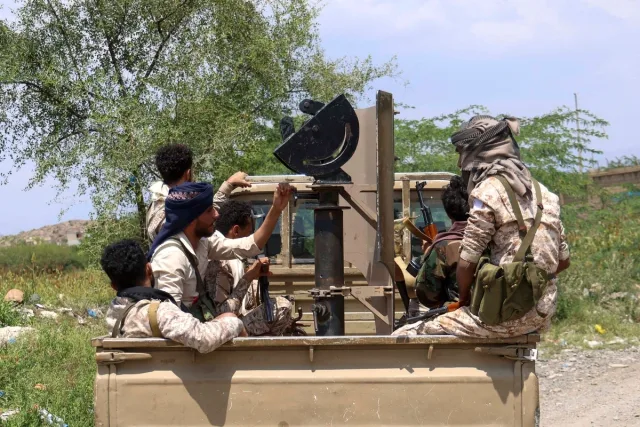
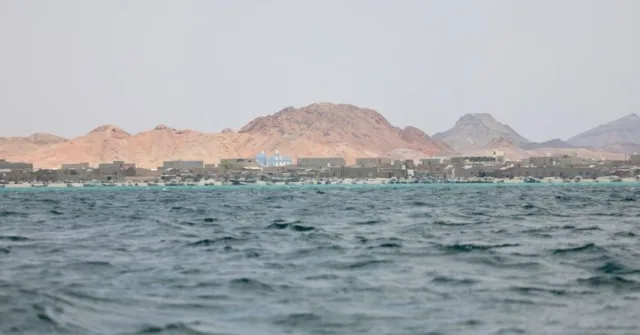
While airports face attacks, fighting in Yemen has focused in recent days on areas around the Bab el Mandeb Strait, a shipping route that has become more crucial for energy exports since the conflict between the US and Iran restricted trade through the Strait of Hormuz. This week, Yemeni government forces with Saudi-led coalition air support launched a counteroffensive to recapture strategic territory near the strait and around the town of Mocha that the Houthis had captured in September, but it is unclear if their advance will hold. On Monday the Yemeni government said it had reached Mocha, which sits at a junction with a supply route to the critical battleground of Taiz, but the claim had been premature, according to Yemeni military officials on the ground and analysts. Fighting on the western front remains concentrated in the Dhubab district overlooking Bab el Mandeb, with pro-government forces attempting an advance in the strategic hills to the east of that coastal plain, Yemeni military and government sources said.
The humanitarian toll of the renewed hostilities continues to mount at an alarming pace across the impoverished nation. The number of people displaced since the latest round of fighting began has risen to more than 200,000, the International Organization for Migration (IOM) said. People are running for their lives and finding nowhere safe to go,
said IOM Director General Amy Pope, who called for more funding amid rising needs for food and shelter. The UN says three in four families are going hungry in parts of Yemen. The fighting, a spillover from the wider US-Iran conflict, has revived a war in Yemen that led to one of the worst humanitarian crises globally and fragmented the Arab world's most impoverished country. The Saudi-led coalition accuses Iran of arming, training and funding the Houthis. The group, mountain fighters who have emerged as a force of tens of thousands with missiles and drones that threatens the region, denies being part of Iran's Middle East proxy network, and says it develops its own weapons. Tehran also rejects the allegations.
| Attack Location | Date Reported | Fatalities | Injuries |
|---|---|---|---|
| King Khalid International Airport (Riyadh) | Tuesday or Wednesday | 1 | 8 |
| Abha Regional Airport | Tuesday or Wednesday | 2 | 28 |
| Aden International Airport | Wednesday | 0 (Runway strike) | Not reported |
Regional Realignments and Diplomatic Pressures
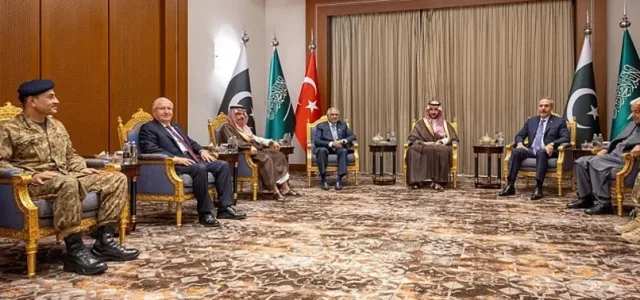
Any Houthi control of the strait could threaten shipping or global oil flows, and Saudi Arabia has been seeking international assistance to repel the Houthis. Turkey is sending mainly defensive and technical support, two officials said on Wednesday, after the NATO member and Pakistan pledged to implement a collective defence commitment under their newly formed alliance. Syria is carefully considering providing military assistance to ally Saudi Arabia amid the escalating war against the Houthis, a US official and a Syrian military official briefed on the matter said. Options being considered include defensive aid to protect the kingdom from attacks, or deployment of forces in an offensive capacity to help Saudi-backed Yemeni troops fight the Houthis, the officials said. The US official said Saudi Arabia had requested that Syria deploy forces to fight the Houthis. In response to a request for comment from the Syrian foreign ministry, a Syrian diplomat said Syria stood firmly with Saudi Arabia in the face of Houthi attacks but that the government's primary focus was on domestic priorities such as recovery from the country's civil war. The official Syrian Response page on X responded to reports saying they supported Saudi Arabia were not interested in opening new fronts, writing: Our priority is Syria: rebuilding the country, strengthening its institutions, working with our partners on reconstruction and improving the lives of Syrians. Any military cooperation with partner countries would take place only through official channels and existing bilateral frameworks,
The regional turmoil is inextricably linked to the broader diplomatic standoff between Washington and Tehran, which continues to rattle global markets. US vice president JD Vance told Reuters that Iran must make a meaningful
reduction in its nuclear enrichment capacity to satisfy US demands and end the countries’ seven-month war. Vance, a longtime skeptic of US involvement in foreign wars, has taken a leading role in negotiating a settlement to the conflict and brokered a provisional peace agreement in June that quickly fell apart. The war has jolted global energy markets and become a political liability for US president Donald Trump ahead of November midterm elections. Vance told Reuters on Monday after a campaign trip in Alaska that any agreement would require Iran to reduce its nuclear enrichment capacity, rather than offer assurances of future nuclear drawdowns. If you don't want a nuclear weapon, then why do you need 60% enriched fuel? And if you want to show commitment to not building a nuclear weapon, don't build highly enriched fuel. That's a very basic threshold issue,
Vance said. Donald Trump, who waged war with Iran and has yet to broker peace in Ukraine, said on Wednesday that he should win the Nobel Peace Prize but acknowledged doubt about his chances. I don't know what their decision is going to be,
Trump said of the 2026 award, which the Norwegian Nobel Committee will announce on Friday. They have a reputation for maybe not giving it to people like me.