Egypt Train Crash Kills Seven and Injures Over 100 in Giza
A rear-end collision between two passenger trains in Egypt's Giza province left casualties and injured individuals, sparking an investigation.
What Caused the Giza Train Collision and Who Was Affected?
I am following the aftermath of the train collision with great concern and extend my deepest condolences to the families of those who lost their lives, along with my sincere wishes for a speedy recovery for the injured,
Egyptian President Abdel-Fattah el-Sissi said in a social media post, as emergency response efforts unfolded on Sunday, November 8, 2026. The crash left varying casualty figures reported by officials, with the Health Ministry citing at least four dead and 88 injured, while other tallies from the scene recorded up to 10 or seven deaths and more than 100 or 114 injured. A train driver was among those killed when two passenger trains collided in southern Egypt's Giza province, roughly 52 kilometers or 32 miles south of Cairo.
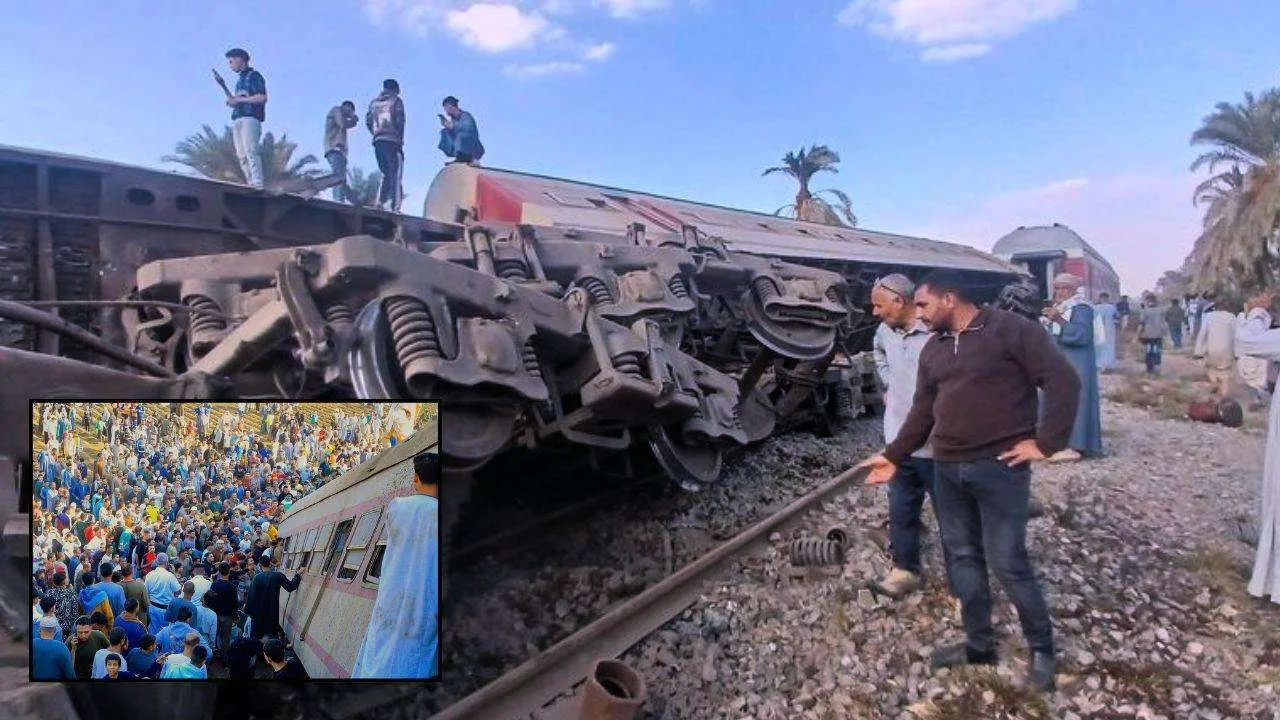
The disaster occurred in the Gerza village of the Al Ayyat district, specifically between the stations of Kafr Ammar and Al Raqqa, along the Cairo Upper Egypt line. Train No. 134, traveling from Giza to Fayoum, crashed directly into the rear of Train No. 2010, which was operating on the route from Cairo to Aswan. The violent impact caused several carriages to derail, leaving a trail of uprooted seats, damaged wiring, and ruptured sections where emergency workers waded through wreckage. That leaves investigators facing an extensive task to determine how two passenger trains occupied the same stretch of track.
How Are Hospitals and Emergency Teams Responding?
Seventy-two ambulances rushed to the crash site to handle the massive evacuation effort, transporting the wounded to three primary medical facilities. Egypt's Health Minister Dr. Khaled Abdel Ghaffar directed all health facilities across the Giza and Beni Suef governorates to raise their alertness levels and provide full medical support. Patients sustained severe injuries, including bruising, fractured limbs, pelvises, and vertebrae, alongside deep cuts to the head and face.
Casualties were distributed across specific regional medical centers according to official figures from the ground:
- Al Wasta Hospital received 49 of the injured and two of the deceased.
- Al Ayyat Hospital admitted 29 of the wounded.
- Atfih Hospital treated 10 of the injured and received one of the dead bodies, while a fourth body remained at the crash site temporarily.
The Egyptian Railway Authority deployed heavy cranes and specialized emergency crews to clear the damaged railway carriages from the Cairo-Aswan agricultural road near the Gerza junction. Officials stated they are working continuously to remove debris and restore rail traffic on the vital corridor as quickly as possible. Meanwhile, President el-Sissi directed state agencies to investigate the exact circumstances and hold anyone found negligent strictly accountable.
Why Does Al-Ayyat Keep Suffering Rail Disasters?
The tragedy in Giza highlights a grim historical precedent for the Al Ayyat district, which has long stood as one of the most hazardous stretches in Egypt's transportation network. A devastating fire in the same region in 2002 killed 361 people, marking one of the worst transport disasters in the country's history and prompting the resignation of then-transport minister Ibrahim Al Damiri. More recently, in September of last year, a train driver and his assistant suffered injuries when two freight trains collided in this exact same district.
Over the past decade, the Egyptian government has poured billions of dollars into modernizing transport infrastructure, building new highways and high-speed rail lines across the country. Yet, much of the ageing national rail network remains unoverhauled, leaving commuter and passenger lines vulnerable to catastrophic operational failures. That funding gap between flashy new high-speed projects and legacy track maintenance creates a persistent vulnerability on regional routes.
What Can Affected Passengers and Families Check Now?
If you or someone you know was traveling on the Giza-Fayoum or Cairo-Aswan lines on Sunday, November 8, 2026, take immediate steps to locate missing family members and verify medical statuses:
- Contact or visit Al Wasta Hospital, Al Ayyat Hospital, or Atfih Hospital, where the injured and deceased were evacuated.
- Monitor updates from the Egyptian Ministry of Health and the Egyptian Railway Authority regarding emergency hotline numbers for casualty identification.
- Avoid the Cairo Upper Egypt line near Kafr Ammar and Al Raqqa stations, as heavy cranes and clearance teams continue active debris removal.
The exact technical failure behind the rear-end collision remains unverified by transport authorities, even as the presidential probe gets underway. That leaves the Ministry of Transport under intense public pressure to explain how signaling or scheduling breakdowns allowed Train 134 to strike the back of Train 2010 on a heavily monitored agricultural line.