US military strikes Iran for 13th night as oil prices top $100 per barrel
The U.S. launched strikes against military and commercial sites in Iran following Houthi attacks on two Saudi oil tankers in the Red Sea. The escalation has pushed Brent crude oil prices above $100 per barrel for the first time since May.
The U.S. military launched its 13th consecutive night of strikes against Iran on Thursday, intensifying a conflict over control of critical shipping routes and driving global oil prices above $100 per barrel for the first time since May. The attacks, which targeted military and commercial sites, followed reports of Iranian-backed Houthi rebels striking two Saudi oil tankers in the Red Sea, adding a new flashpoint to the regional crisis. The escalation has raised fears of broader economic and geopolitical fallout, with oil markets reacting sharply to the heightened tensions, according to multiple sources.
The strikes, announced by U.S. Central Command, aimed to “further degrade Iran’s ability to threaten civilian mariners and commercial vessels transiting regional waters,” according to a statement. The attacks, which ended shortly before 5 a.m. local time on Friday, targeted locations including Bandar Abbas, Qeshm Island, and areas near Ahvaz, where four people were killed and five wounded, Iranian state media reported. U.S. officials emphasized the campaign’s goal of securing the Strait of Hormuz, through which a fifth of the world’s oil and gas flows, and restoring stability to global shipping lanes, as detailed in reports from *huffpost.com* and *business-standard.com*.
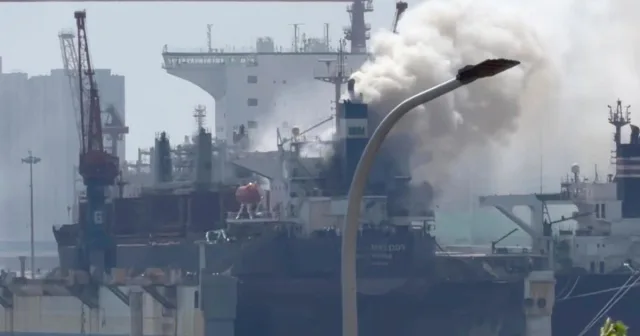
The Houthi rebels, which the U.S. accuses of being proxies for Iran, claimed responsibility for the Red Sea attacks, setting fire to two Saudi oil tankers, the Encelia and the Layla. The strikes marked the group’s first reported assault on a vessel since announcing a blockade of Saudi-linked shipping through the Bab el-Mandeb Strait, a vital chokepoint connecting the Red Sea to the Gulf of Aden. The attacks have compounded disruptions caused by Iran’s earlier closure of the Strait of Hormuz, forcing Saudi Arabia to divert millions of barrels of oil exports via an overland pipeline to the Red Sea port of Yanbu. Maritime analysts warned that the Houthi threats could undermine this alternative route, exacerbating global supply chain pressures, as noted by *business-standard.com* and *econotimes.com*.
President Donald Trump responded to the Houthi attacks with threats of “major military punishment,” accusing Iran of orchestrating the strikes through its proxies. “If they do this again, the U.S. will hold Iran responsible… and major military punishment will be inflicted upon Iran and, of course, the Houthis, themselves,” Trump wrote on social media. His administration also announced plans to use sanctioned Iranian funds to cover damages to ships and cargo, a move criticized by Iran’s foreign minister, Seyed Abbas Araghchi, as an “incendiary” precedent that could destabilize global financial systems, as reported by *huffpost.com* and *yahoo.com*.
The conflict has spilled into domestic politics in the U.S., where the House of Representatives narrowly approved a resolution to end the war, though the Senate blocked the measure. The vote, largely symbolic, reflected growing public opposition to the conflict, with polls showing most Americans disapprove of Trump’s handling of the Iran war. Despite the congressional pushback, Trump defended the military campaign, stating, “We want to get it over with, and we want to do it right, but we have to… do what we came to do.” The administration has spent an estimated $37.5 billion on the war so far, with Defense Secretary Pete Hegseth requesting an additional $67 billion in funding, according to *yahoo.com* and *business-standard.com*.
Iran has retaliated by targeting energy infrastructure and desalination plants in Gulf countries, further straining regional stability. The conflict has also drawn international scrutiny, with UN Secretary-General Antonio Guterres warning that the region risks being “pulled into an ever widening circle of confrontation.” Iraq’s Prime Minister Ali al-Zaidi, who had recently mediated a ceasefire proposal, reported that Iran rejected the plan, citing its refusal to address long-term control of the Strait of Hormuz. Tehran has signaled readiness to expand the conflict, with Iranian officials suggesting potential strikes on Tel Aviv and urging Houthi allies to disrupt shipping through the Bab al-Mandab Strait, as noted by *econotimes.com* and *huffpost.com*.
The economic toll has been severe. Brent crude oil surged over 6% to $100 per barrel, its highest level since May, while U.S. gasoline prices climbed to $4.09 per gallon. Analysts warned that continued instability could drive prices higher, with some predicting a jump to $4.25–$4.40 per gallon in the coming weeks. The conflict has also complicated diplomatic efforts, as Gulf states and international actors grapple with the risks of a broader war. Despite calls for de-escalation, the cycle of retaliation shows no signs of abating, with both sides doubling down on military and rhetorical confrontations, according to *business-standard.com* and *econotimes.com*.
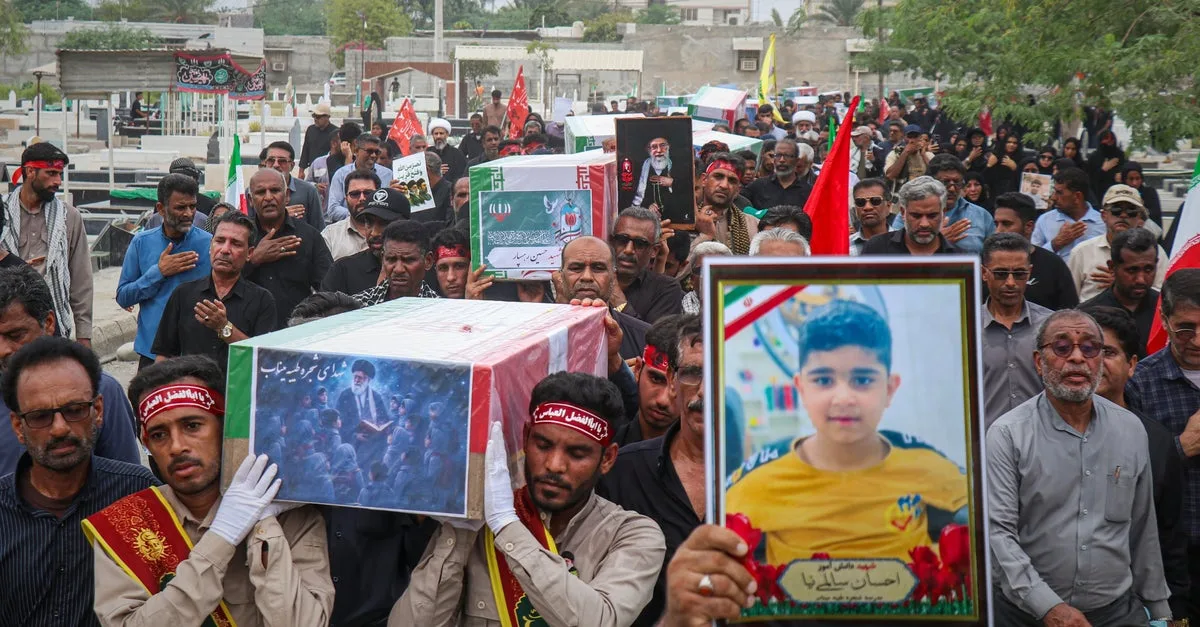
As the 13th night of strikes unfolded, the human cost mounted. Iran’s health ministry reported 55 deaths and 629 injuries since renewed U.S. airstrikes began on June 27. Meanwhile, the U.S. military continued to expand its operations, including the deployment of a B-1 bomber to strike Iranian targets. With tensions at a breaking point, the world watches closely as the conflict threatens to spiral into an even more chaotic regional crisis, as detailed in reports from *huffpost.com* and *yahoo.com*.
Dateline Wire is dedicated to independent, evidence-backed reporting. This briefing was synthesized from primary source reporting, corroborated across independent newsrooms, and verified against our Editorial Standards.