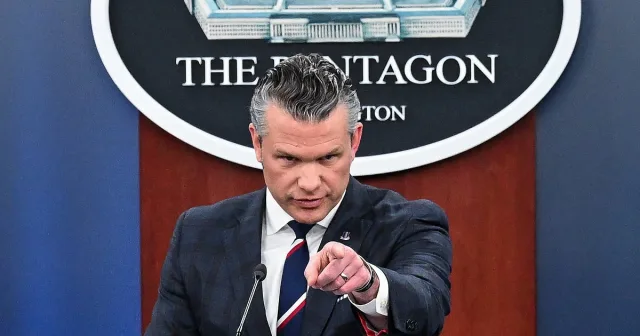
Pentagon says execution of Fort Hood shooter will be livestreamed
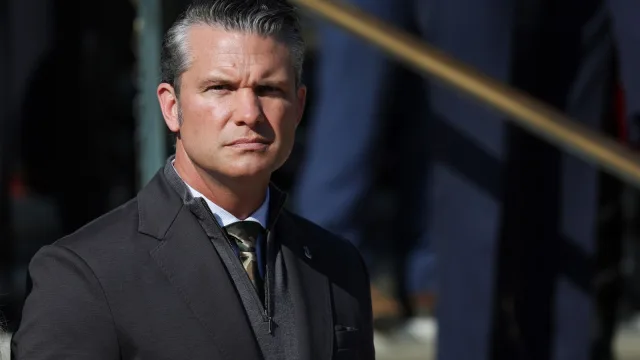
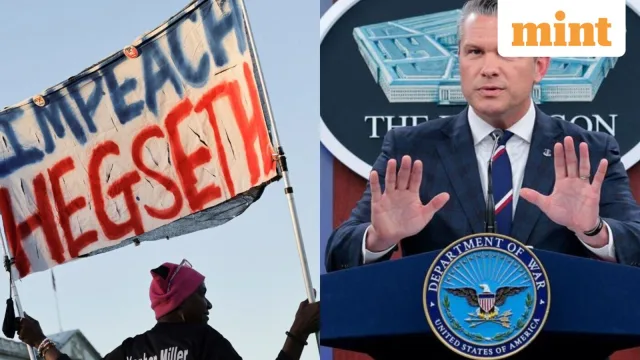
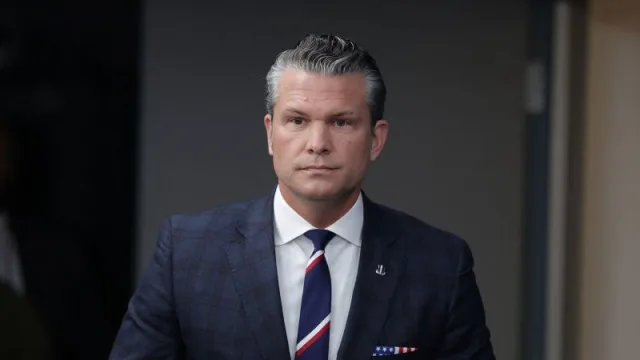
Defense Secretary Pete Hegseth announced that the execution of former Army psychiatrist Nidal Malik Hasan by firing squad at Fort Hood will be livestreamed.
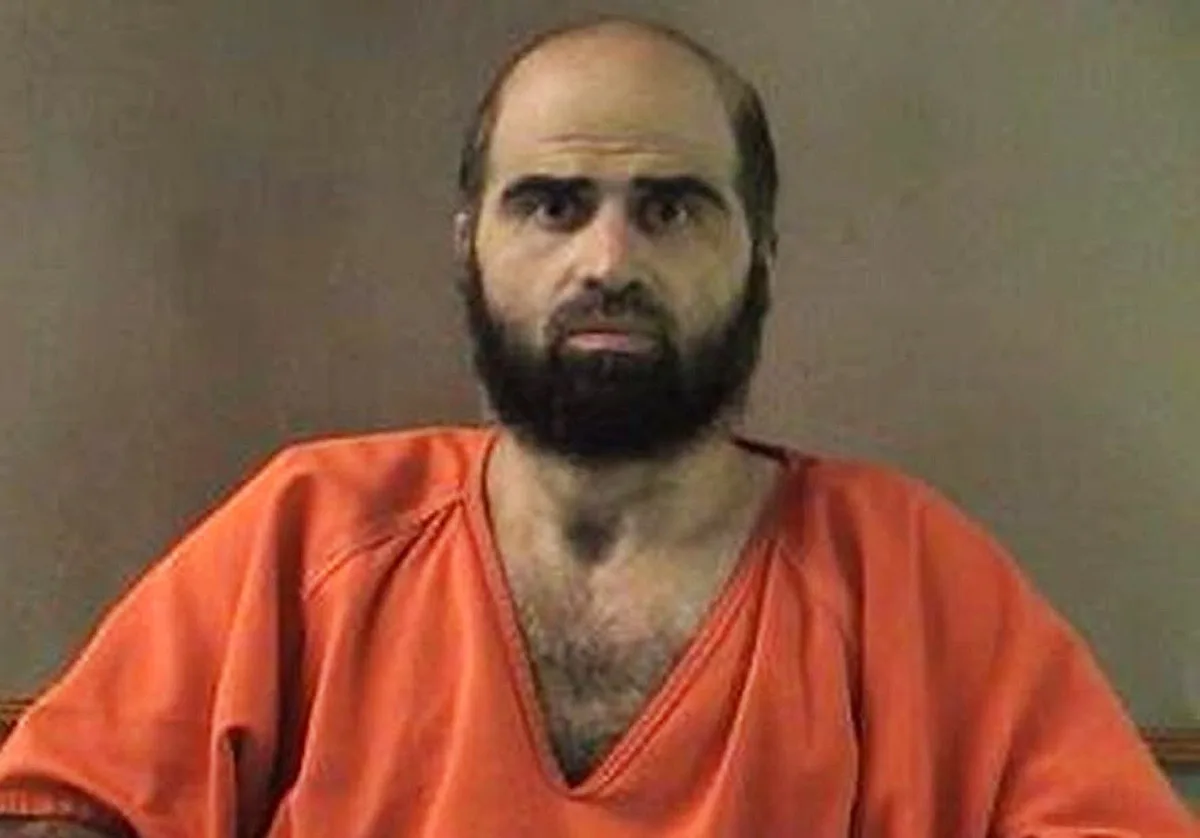
Pentagon confirms Fort Hood shooter execution will be livestreamed
The Pentagon confirmed on Thursday that the upcoming execution of former Army psychiatrist Nidal Malik Hasan will be livestreamed, marking an unprecedented broadcast for a state-sanctioned killing by a major democracy. A Pentagon official told AFP on condition of anonymity on Thursday that It will be livestreamed. Details will follow.
Defense Secretary Pete Hegseth announced the plans, stating We are going to make sure that people are able to watch it, that it's public because People need to understand that...there's serious consequences for these types of things.
The decision to stream the execution breaks from modern American penal practice, where state and federal executions occur behind closed doors before tiny witnesses. Hegseth defended the move in interviews, telling right-wing activist Jack Posobiec He’s gonna get a firing squad of soldiers, as it should be,
while speaking aboard the USS Abraham Lincoln aircraft carrier. Hegseth added that he likes the mentality of World War II which was win, which was understand when the enemy attacks you, you need to stand your ground. Pentagon spokesperson Sean Parnell wrote on X that Judgment day for Hasan has finally come. When asked whether Hasan had made any final requests or reached out to the administration, Hegseth replied, Don't care. We'll see him on Dec. 3.
Fort Hood Shootings and Trial History
Hasan was convicted by a military jury in 2013 on 45 counts of murder and sentenced to death. On November 5, 2009, Hasan walked into a medical processing center at Fort Hood in Texas where soldiers waited in long lines for deployment clearances. Shouting "Allahu akbar", he opened fire with a laser-sighted handgun and shot at fleeing soldiers. The attack left 13 people dead and 32 others injured. Twelve of those he killed and 30 of the wounded were soldiers. A civilian police officer who responded to the attack shot and partially paralyzed him.
During his trial, Hasan fired his lawyers and represented himself, beginning his portion by telling jurors he was the gunman. He presented no witnesses and made no closing argument. Prosecutors presented nearly 90 witnesses, while documents leaked by Hasan during the trial revealed him telling military mental health workers that he could still be a martyr if executed. Court-appointed defense attorneys expressed concern that he was seeking execution. The court that convicted Hasan was told he was opposed to the U.S. military’s occupations of Iraq and Afghanistan, and that he had spoken online with an alleged Al-Qaeda figure, radical cleric Anwar al-Awlaki, an American citizen subsequently killed in a U.S. drone strike in Yemen. In court, Hasan apologized for any mistakes and stated he believed he was protecting Muslims and the Taliban in Afghanistan, though a military judge barred that defense.
Timeline of Key Developments
- November 5, 2009: Hasan opens fire at a Fort Hood medical processing center, killing 13 and injuring 32.
- 2013: A military jury convicts Hasan on 45 counts of murder, sentencing him to death.
- December 3: Scheduled date for the military execution by firing squad at Fort Hood.
Political Approvals and Global Context
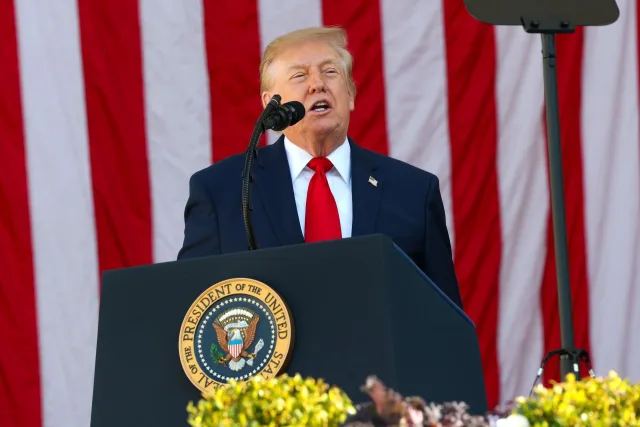
President Donald Trump approved Hasan's execution after the inmate exhausted his appeals last year. Under the Uniform Code of Military Justice, a death sentence imposed by a court-martial cannot be carried out until approved by the president. Federal and military executions have traditionally used lethal injection, but the Trump administration directed the Bureau of Prisons and the Department of Defense to revive alternative methods including firing squads, nitrogen gas, and electrocution to expedite sentences. Trump also signed an executive order upon returning to office directing the attorney general to seek the death penalty in future cases for all crimes of a severity demanding its use, after Joe Biden had previously commuted 37 federal death row sentences.
Democratic Senator Chris Murphy told CNN that livestreaming the execution was disgusting and reminiscent of executions carried out by the Islamic State group. According to Amnesty International data from last year, out of more than 2,700 executions across 17 countries, only two countries carried them out publicly, with 17 public executions known to have been carried out in 2025, consisting of 11 public executions in Iran and 6 in Afghanistan last year.
Legal and Expert Reactions to the Spectacle
Legal scholars see the livestreaming plan as a deliberate political spectacle. Elisabeth Semel, co-director of the Death Penalty Clinic at UC Berkeley Law, noted that while the idea of televising executions has long been discussed, she recalls no situation instigated by the government. This is a president who's about spectacle and that's, I think, precisely the message that he intends to deliver,
Semel said, expressing skepticism that the administration considered the legal repercussions. John Mills, a lawyer who works with inmates sentenced to death, called the decision unprecedented in the modern era and on uncertain legal terrain, adding that seeking to make it a livestreamed firing squad is little more than attention-seeking by the Trump administration and is unlikely to occur, much less deliver any semblance of justice.
Conversely, Deborah Denno, a death penalty expert and law professor at Fordham University, argued that livestreaming could make capital punishment much more transparent by forcing the public to witness what the process entails. I think it could possibly be a good idea because it would be transparent and the public would be fully aware that it’s happening,
Denno said, noting it could inform the public at a time when Christa Pike's botched lethal injection has raised fresh questions about execution methods. Denno added that a livestream would raise questions regarding age-restrictions and online platform policies.
Military History and Alternative Methods
Capital punishment has deep roots in military law, but active use faded generations ago. The Death Penalty Information Center says that 135 soldiers have been executed by the U.S. military since 1916. The last military execution took place on April 13, 1961, when Army Private John Bennett was hanged for rape and attempted murder after being authorized by President Dwight D. Eisenhower despite the victim's family asking John F. Kennedy for clemency. The upcoming execution will be the first by the U.S. military since 1961, and the first it has carried out by firing squad since World War II. The last time a U.S. military execution was carried out by firing squad occurred on January 31, 1945, when Army Private Eddie Slovik faced 12 riflemen from his own unit using M1 Garands for desertion during World War II, with four shots proving fatal. No state or federal execution in the U.S. has ever been televised, and the last public civilian execution took place in Owensboro, Kentucky, on August 14, 1936.
The Trump administration's broader push for firing squads arrives as states struggle to obtain lethal injection drugs or find medical professionals willing to participate. Brenner Fissell, a professor at Villanova Law and vice president of the National Institute of Military Justice, noted that firing squads are viewed by proponents as a quicker, cleaner, and more precise alternative, though he argued that I don’t think that’s what’s motivating this. There’s a perceived masculinity and military-ness to firing squads that is part of the aura Hegseth is trying to emphasise — the 'lethality culture'.
While mass shootings in the United States are common, they are relatively rare at military facilities. In 2025, a soldier opened fire at a U.S. military base in the state of Georgia, wounding five fellow troops before he was tackled and apprehended. In 2019, a U.S. sailor fatally shot two people and wounded a third at a base in Hawaii, while a Saudi military student shot dead three people at a military facility in Florida the same year. A Kuwaiti-born U.S. citizen attacked two military installations in Tennessee in 2015, killing four Marines and a sailor, an event the FBI concluded was inspired by a foreign terrorist group.
Five states currently authorize firing squads: Idaho, Mississippi, Oklahoma, South Carolina, and Utah. Last year, South Carolina carried out three executions by firing squad, including the April 2025 execution of Mikal Mahdi. Attorneys for Mahdi reported that he suffered up to a minute of excruciating conscious pain because the bullets missed his heart and struck his chest instead.
Survivor Perspectives and Legal Hurdles Before December 3
Alonzo Lunsford, a former U.S. Army sergeant who was shot seven times in the 2009 attack, told the BBC's Today programme that he supported the execution by firing squad as a method befitting for what Hasan did. While he does not believe everyone should watch the livestream due to the message it sends younger people, Lunsford stated, As far as the families of the fallen and the families of the survivors, and the survivors themselves, yes, I think we should be able to look at it uncensored.
Lunsford plans to attend the execution and stated, I want him to know he failed. I'm still here.
Meanwhile, Hasan's legal timeline faces potential delays. Eugene R. Fidell, a visiting lecturer at Yale Law School specializing in military law, pointed out that Hasan can choose to resist the execution by filing a habeas petition in civilian court to review his detention. It frankly might outlast the current administration, and who knows if the next one will have the same penchant for executions,
Fidell said, an assessment echoed by John Mills, who noted that appellate review requires a higher court to inspect the decision before final judgment.
Attorney John Galligan, a former military judge who represented Hasan in prior civil matters, expressed concern over Hasan's physical health and stated that Hasan had not yet received proper access to legal counsel when notified of the execution order. Galligan said the commandant brought a chaplain but no defense attorney to the notification, calling it a breach of Army regulations. An Army spokeswoman countered that officials made every reasonable effort to contact the Trial Defense Service, adding that civilian counsel was located in Virginia and not reasonably available to be physically present on October 5, though Hasan remains free to communicate with his lawyers.
The execution is scheduled to take place at Fort Hood on December 3.
Updated 2 times since publication; last update 16 November 2026, 16:32.