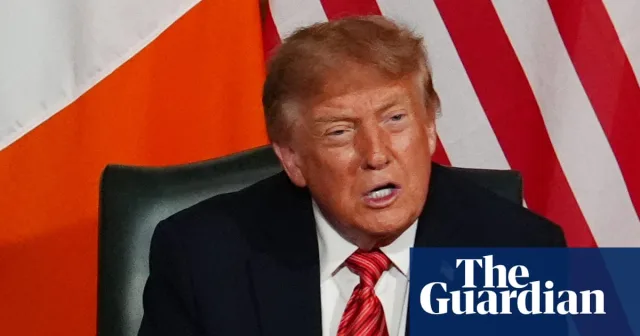
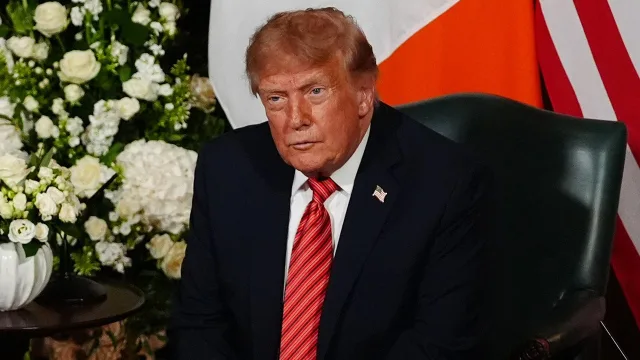
Trump promises $5,000 dividends to US adults if GOP retains Congress
President Trump has pledged $5,000 payments to American adults contingent on Republican midterm success, sparking debate over fiscal feasibility and legality.
Trump’s $5,000 Dividend Proposal Sparks Debate Over Feasibility and Intent
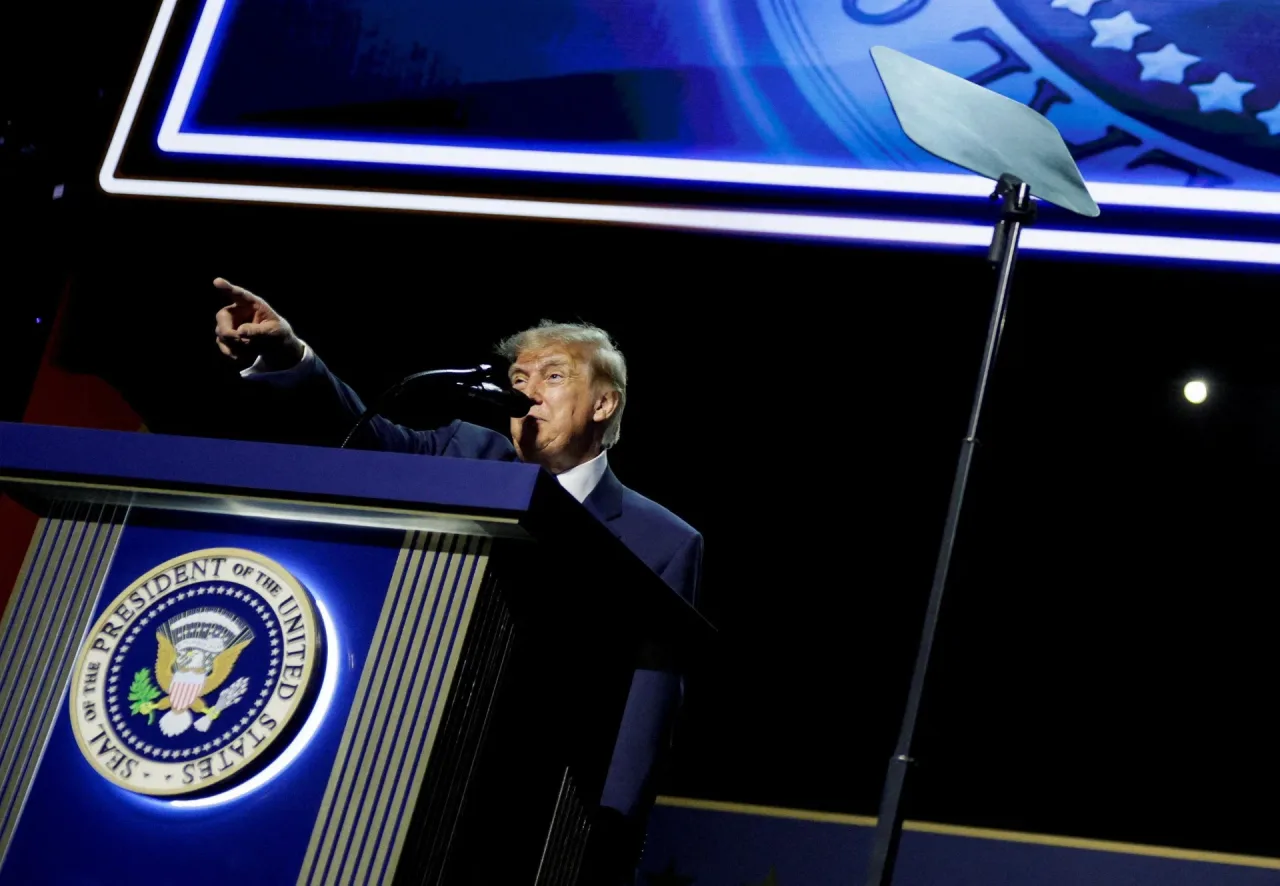
U.S. President Donald Trump’s announcement at a Republican midterm convention on September 9, 2026, that he would distribute $5,000 “dividend” checks to every American adult if the GOP retains control of Congress has ignited a storm of scrutiny over its financial viability, legal implications, and political motives. The pledge, which would cost an estimated $1.2 trillion, has been met with skepticism from economists, lawmakers, and legal experts, who question both its practicality and its alignment with constitutional principles.
The proposal, first detailed in a speech at the Republican National Convention, was immediately challenged by critics who highlighted the absence of a clear funding mechanism. Trump claimed the payments would be supported by revenue from tariffs, but sources indicate that current tariff income — estimated at $200 billion annually — falls far short of covering the cost. Additionally, recent tariff refunds and the federal government’s $40 trillion debt further complicate the plan’s feasibility. “This proposal is fiscally dangerous, economically backwards, and fundamentally unserious,” said Maya MacGuineas of the Committee for a Responsible Federal Budget.
Funding Gaps and Economic Risks
Trump’s promise hinges on a $1.2 trillion price tag, a figure that would require either significant tax increases, spending cuts, or increased borrowing. The president’s past attempts to fund similar initiatives, such as a $2,000 “tariff dividend” in 2025, failed to materialize, raising doubts about the current plan’s execution. Experts warn that such a large-scale payout could exacerbate inflation, particularly given the ongoing economic strain from Trump’s war in Iran and tariff policies, which have already driven up energy and consumer prices.
Jared Mondschein of the University of Sydney noted that the plan lacks the “economic urgency” seen in previous stimulus measures, such as pandemic-era payments. “Even if Republicans retain control, the government’s debt load and competing priorities would make it difficult to secure support for direct payments,” he said. The Congressional Budget Office estimated that the $5,000 dividend would account for 3.5% of GDP, a figure that could further destabilize the federal budget.
| Detail | Information |
|---|---|
| Total Cost of $5,000 Dividend | $1.2 trillion |
| Current Annual Tariff Revenue | $200 billion |
| U.S. Federal Debt | $40 trillion |
| Estimated Inflationary Impact | Significant, per economists |
Legal and Ethical Controversies
The plan has also drawn legal scrutiny, with some experts questioning whether it violates federal laws against vote-buying. Under U.S. law, it is illegal to offer payments intended to influence voting behavior. However, Trump’s campaign has framed the proposal as a broader economic incentive rather than a direct bribe. “It sounds like a bribe, but it goes to everyone, regardless of how they vote,” said Dr. Joan Mahoney of the University of Southampton, adding that such pledges are “legal” in the context of campaign promises.
Despite this, critics argue the plan crosses ethical boundaries. Yahoo News described it as “a reckless, shapeless, irritable spasm” that reflects a broader decline in conservative principles. Vice President J.D. Vance, when asked about funding, suggested tariff revenue could cover the cost, a claim dismissed by analysts as unrealistic. “Tariff revenue has been in negative territory in recent months,” noted a report, citing refunds issued by the administration.
Political Reactions and Midterm Implications
The proposal has deepened divisions within and beyond the Republican Party. While some GOP strategists view it as a way to energize voters, others have criticized its impracticality. Democratic leaders, including Kentucky Governor Andy Beshear, have condemned the plan as a “bribe” aimed at securing short-term political gains. “This shows MAGA is out of ideas,” wrote one commentator, linking the pledge to broader concerns about Trump’s economic policies.
The plan’s timing, just weeks before the November midterms, has also raised questions about its strategic purpose. With polls showing Trump’s popularity at record lows, the promise may be intended to galvanize his base. However, experts remain skeptical. “It’s an extraordinary promise, and I’m not sure where the money is going to come from,” said former Republican strategist Robert Moran, highlighting the tension between campaign rhetoric and fiscal reality.
Frequently Asked Questions
How much would the $5,000 dividend cost, and where would the money come from?
The plan would cost approximately $1.2 trillion, with Trump citing tariff revenue as a potential funding source. However, current tariff income is estimated at $200 billion annually, far below the required amount. Experts warn that the proposal would require tax increases, spending cuts, or additional borrowing.
Is the plan legal?
The legality remains contested. While some legal experts argue it is not a direct bribe since it would be distributed to all adults, others warn it could violate federal laws against vote-buying. The U.S. Supreme Court has previously ruled against similar schemes, citing constitutional concerns.
The coming weeks will test whether Trump’s pledge resonates with voters or further erodes his credibility. With the midterms approaching and the nation’s economic challenges unresolved, the plan’s fate will hinge on both its feasibility and the public’s willingness to accept such a radical economic proposition.
Dateline Wire is dedicated to independent, evidence-backed reporting. This briefing was synthesized from primary source reporting, corroborated across independent newsrooms, and verified against our Editorial Standards.