Germany investigates 105-year-old suspected Nazi PoW camp guard
Prosecutors in Dortmund are investigating a 105-year-old man accused of being an accessory to multiple murders at a Nazi POW camp that held 180,000–200,000 Soviet prisoners.
- Headline: Germany investigates 105-year-old suspected Nazi PoW camp guard
- Dispatch Summary: Prosecutors in Dortmund are investigating a 105-year-old man accused of being an accessory to multiple murders at a Nazi POW camp that held 180,000–200,000 Soviet prisoners.
- Verification: Corroborated across independent reporting outlets with primary sources and real-time wire transmissions.
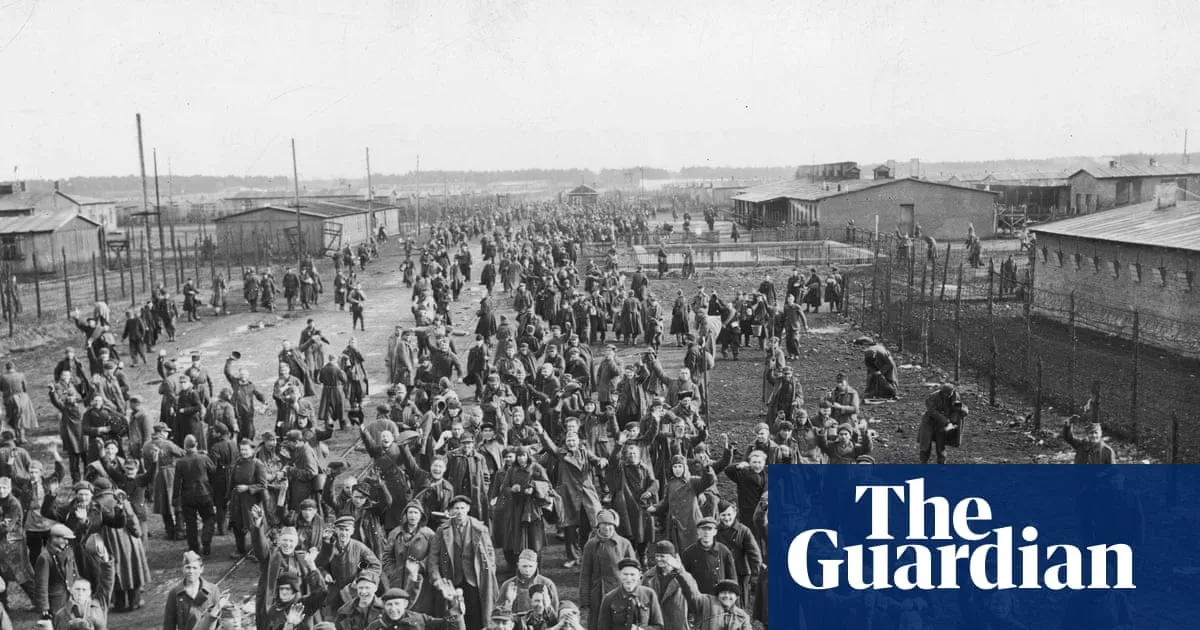
German prosecutors have launched an investigation into a 105-year-old man accused of being an accessory to multiple murders at Stalag 326 VI K, a Nazi prisoner-of-war camp in the Senne region of western Germany. The case, handled by the Dortmund public prosecutor’s office, centers on the suspect’s alleged role as a guard at the camp, which housed between 180,000 and 200,000 Soviet prisoners of war between 1941 and its liberation by American troops in April 1945. The investigation reflects a broader judicial effort to hold accountable those involved in Nazi atrocities, even as the passage of time complicates such pursuits.
Historical Context of Stalag 326 VI K
The Stalag 326 VI K camp, now marked by a memorial, was one of the largest Nazi POW facilities, with Soviet prisoners constituting the majority of its detainees. According to the memorial site, the camp’s conditions were brutal, with prisoners facing malnutrition, inadequate medical care, and forced labor. The memorial estimates that between 2.3 million and 3 million Soviet POWs died in German captivity during the war, out of approximately 5.3 million to 5.7 million taken prisoner. At Stalag 326 VI K alone, the memorial notes the camp’s role in the systemic suffering of Soviet soldiers.
| Detail | Information |
|---|---|
| Estimated Soviet POWs at Stalag 326 VI K | 180,000–200,000 (1941–1945) |
| Estimated Soviet POW deaths in German captivity | 2.3 million–3 million (of 5.3 million–5.7 million total) |
| Number of Soviet POWs surviving liberation | Approximately 9,000 |
| Number of prisoners at Stalag 326 VI K at liberation | ~9,000 |
Legal Precedents and Judicial Challenges
The investigation into the 105-year-old suspect follows a series of high-profile Nazi-era prosecutions, many of which have set legal precedents for prosecuting elderly defendants. In 2011, John Demjanjuk, a former guard at the Sobibór death camp, was convicted of being an accessory to the murder of 28,000 Jews, despite no evidence he directly killed anyone. His case lowered the threshold for proving complicity, enabling subsequent trials of nonagenarians and centenarians. Similarly, Josef Schütz, a former guard at Sachsenhausen concentration camp, was sentenced to five years in 2022 for complicity in murder but died the following year at age 102, becoming the oldest Nazi criminal to face trial.
German law allows prosecution of murder and accessory to murder without a statute of limitations, a provision enacted in 1979 to address Nazi crimes. This legal framework has enabled prosecutors to pursue cases even as suspects age, though the process is fraught with challenges. In 2025, a 100-year-old former guard at a Hemer POW camp was investigated for alleged participation in executions, but the case was complicated by the suspect’s death. A similar investigation into a second guard at Stalag 326 VI K also ended with the suspect’s death in 2026, highlighting the race against time for prosecutors.
Broader Implications for Nazi-Era Prosecutions
The case underscores the ongoing efforts by German authorities to confront historical atrocities, even as the number of surviving suspects dwindles. The Central Office for the Investigation of National Socialist Crimes in Ludwigsburg, which oversees such cases, has increasingly relied on historical records and survivor testimonies to build prosecutions. Recent trials, such as that of Irmgard Furchner, a former secretary at Stutthof concentration camp who received a suspended sentence for accessory to murder, demonstrate the evolving legal standards for evaluating roles in Nazi crimes.
Survivors and historians anticipate that the Stalag 326 VI K investigation could shed light on the broader Stalag system, which housed millions of prisoners across Nazi-occupied Europe. The camp’s role in the forced labor and starvation of Soviet POWs aligns with the regime’s broader strategy of exploiting captured soldiers, a practice that contributed to the deaths of over half of all Soviet prisoners. However, the lack of direct evidence in many cases complicates prosecutions, as seen in the Demjanjuk and Schütz trials, where guilt was established through circumstantial evidence of participation in the Nazi machinery.
Frequently Asked Questions
What is the legal basis for prosecuting the 105-year-old suspect?
German law has no statute of limitations for murder or accessory to murder since 1979, allowing prosecutors to pursue Nazi-era crimes regardless of the suspect’s age. This framework enabled the investigation into the 105-year-old man, who is accused of complicity in multiple murders at Stalag 326 VI K.
Why are these investigations so difficult?
Prosecutors face challenges due to the passage of time, including the death of many suspects, the loss of records, and the reliance on circumstantial evidence. For example, the 100-year-old Hemer camp guard died before trial, and the 105-year-old suspect’s case hinges on historical records and survivor testimonies.
The outcome of the investigation into the 105-year-old suspect remains uncertain, but its significance extends beyond the individual case. As the last generation of Nazi-era participants fades, such prosecutions serve as proof of the persistence of justice, even decades after atrocities. The trial, if it proceeds, could offer a final reckoning with the Stalag system’s role in the suffering of Soviet POWs, while also raising questions about the limits of historical accountability in an era where direct witnesses are vanishing.
How significant is this wire dispatch?
Cast your anonymous vote to register reader consensus across journalism and intelligence sectors.
Dateline Wire is dedicated to independent, evidence-backed reporting. This briefing was synthesized from primary source reporting, corroborated across independent newsrooms, and verified against our Editorial Standards.