Man who stabbed Salman Rushdie in 2022 convicted of federal terrorism ch…
Hadi Matar was found guilty of federal terrorism charges by a U.S. jury for the 2022 knife attack on author Salman Rushdie.
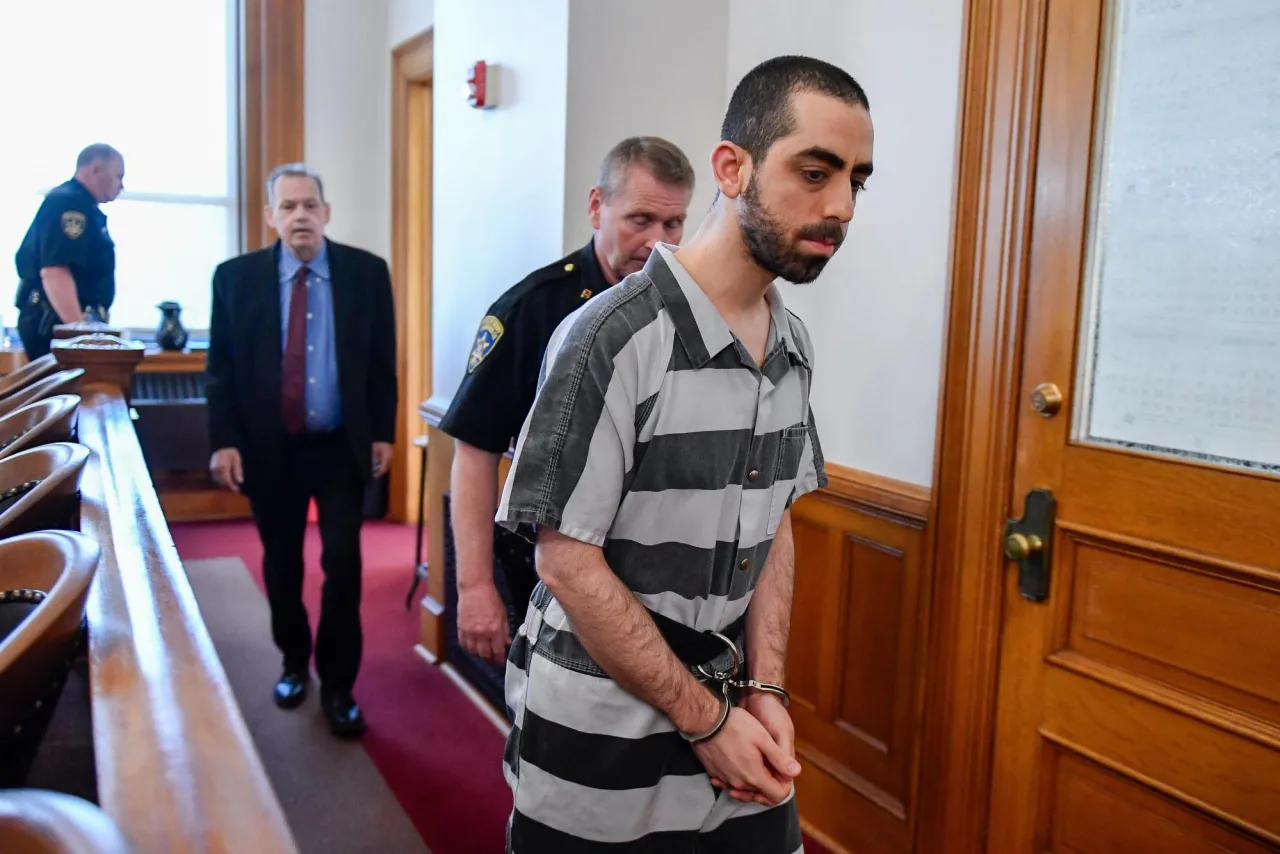
A man convicted Wednesday of federal terrorism charges in the 2022 stabbing of author Salman Rushdie has been sentenced to a potential life term, marking a new chapter in the case tied to the controversial novel “The Satanic Verses.” Hadi Matar, 28, was found guilty by a U.S. District Court jury in Buffalo, New York, of engaging in transnational terrorism and attempting to kill Rushdie, who was left permanently blinded in one eye and sustained severe injuries during the attack. The jury reached its verdict after just two hours of deliberations, convicting Matar on all counts.
The prosecution argued that Matar’s attack was motivated by Iran’s 1989 fatwa, a religious edict issued by the late Supreme Leader Ayatollah Ruhollah Khomeini, which called for Rushdie’s death over the publication of “The Satanic Verses.” The novel, a work of magical realism, sparked global controversy for its portrayal of Islam’s Prophet Muhammad, leading to protests, riots, and violence, including the 1991 murder of Rushdie’s Japanese translator, Hitoshi Igarashi. Matar, who also holds Lebanese citizenship, had already been serving a 25-year state prison sentence for attempted murder following the attack. His federal sentencing, scheduled for November 3, could result in a life term.
Prosecutors emphasized evidence linking Matar to Hezbollah, including photos in his New Jersey home and digital communications that revealed his support for the group, which the U.S. designates as a terrorist organization. During the trial, Rushdie testified about the attack, describing the “devastating” wounds he sustained and acknowledging he could not fully understand Matar’s motives. “I can’t say what his ambitions or his aim was, but the wounds were dispersed across my body,” he said. The author, who was knighted by Britain’s late Queen Elizabeth II, also recounted his decades of living under threat, including a period of seclusion after the fatwa was issued.
Matar’s defense, led by attorney Nathaniel Barone, argued that prosecutors lacked evidence of his intent, claiming the government could not prove what “was in Matar’s head.” However, the jury rejected this argument, underscoring the federal government’s assertion that the attack was part of a broader pattern of transnational terrorism. Assistant Attorney General John Eisenberg called the verdict “justice done,” while Iran’s government denied any involvement in the attack. The case has reignited debates about the global reach of religious extremism and the risks faced by authors and artists.
Rushdie, who has long advocated for free expression, has described the fatwa as a “chilling reminder of the global reach of Iranian terrorism.” The conviction also highlights the enduring legacy of the 1989 edict, which continues to influence acts of violence decades later. Matar’s communications during the trial referenced statements by Hezbollah leader Hassan Nasrallah, linking the attack to broader militant ideologies. In one note, he wrote, “We need to kill him ASAP,” according to Assistant U.S. Attorney Timothy Lynch. Matar’s messages also expressed anger over what he perceived as Rushdie’s “attacks” on Islam and framed the killing as a “jihad,” or holy war.
The attack occurred on August 12, 2022, at the Chautauqua Institution in western New York, where Rushdie was set to speak about writers’ safety. As he was introduced, Matar climbed onto the stage and stabbed him 15 times before being subdued by audience members. Rushdie’s memoir, “Knife: Meditations After an Attempted Murder,” published in 2024, detailed his recovery and the emotional toll of the attack. He has since returned to fiction, releasing “The Eleventh Hour” in 2025. In recent statements, Rushdie reflected on the dangers facing culture and free expression, stating, “For the authoritarian, culture is the enemy. Whether that’s journalism or universities or music or writing.”
Matar, who was already serving a 25-year state prison sentence for attempted murder, now faces the possibility of a life sentence. His attorney, Nathaniel Barone II, has indicated that an appeal will be filed. The case has drawn attention to the intersection of religious extremism, transnational terrorism, and the risks faced by public figures. Rushdie’s legal team has emphasized the ongoing threat posed by the fatwa, which remains in effect despite Iran’s 1998 distancing from the edict. A $3 million bounty for his killing remains active, and the 2017 reaffirmation of the fatwa by Khomeini’s successor, Ayatollah Ali Khamenei, underscores its continued influence.
Dateline Wire is dedicated to independent, evidence-backed reporting. This briefing was synthesized from primary source reporting, corroborated across independent newsrooms, and verified against our Editorial Standards.