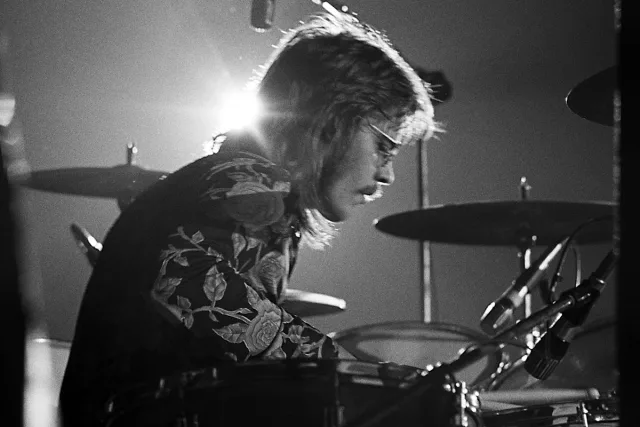
Mike Love, Beach Boys Co-Founder and Singer, Dies at 85
Mike Love, the co-founder, lyricist and enduring onstage voice whose nasal tenor defined the Beach Boys' sunny California sound, has died at 85.
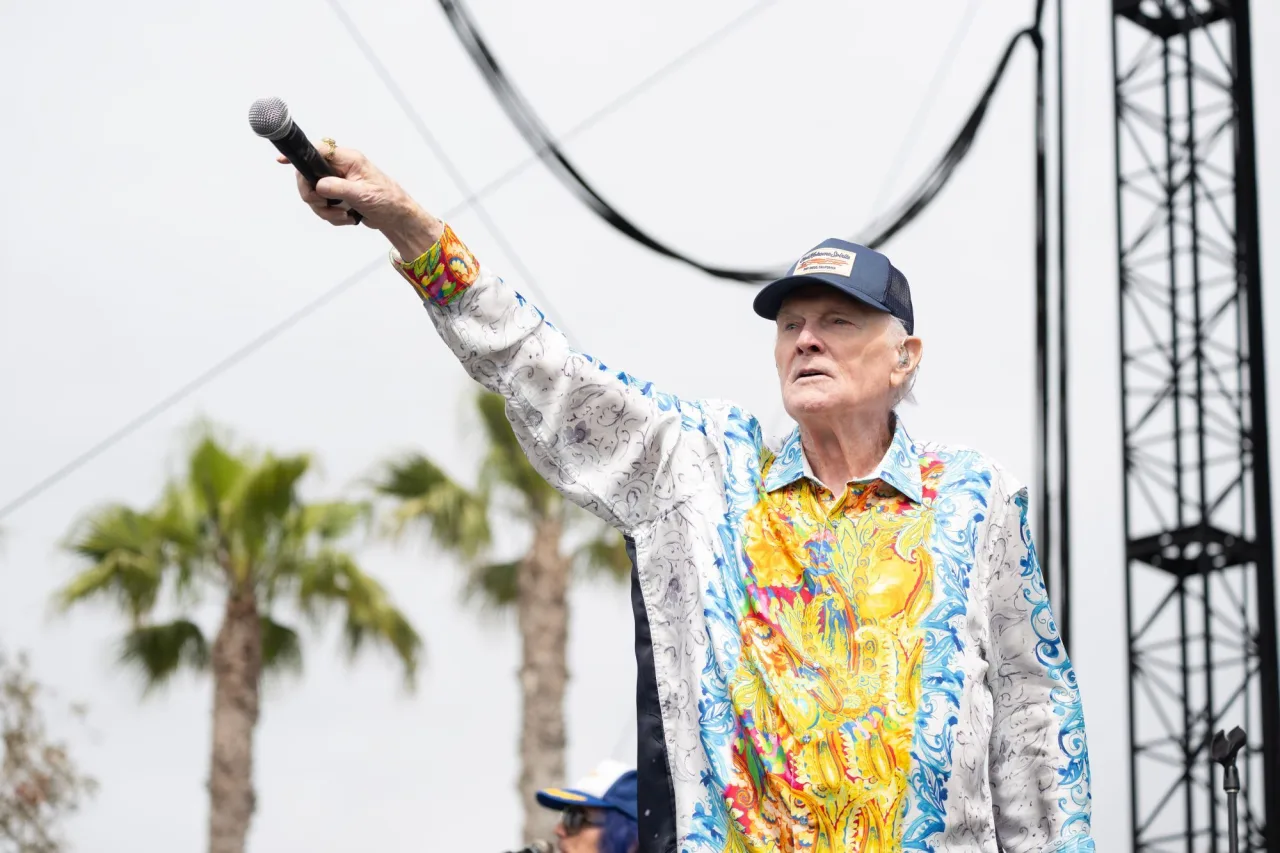
Mike Love, the vocalist and songwriter who co-founded the Beach Boys and served as the group’s longest-standing mainstay, died Saturday night at the age of 85, surrounded by family. His publicist, Katie Altman, confirmed the death to NPR in an emailed statement, stating, Mike Love died this evening, surrounded by family. An American cultural icon, he will be remembered for his singular talent and inspiration to generations of musicians.
No cause of death was given, though NBC reported that paramedics responded to a medical emergency in Malibu around 5 p.m. that is believed to be related to Love.
That loss closes the final chapter on the primary front-man era of America's quintessential surf-pop band, leaving behind a complex legacy of chart-topping sunshine and decades of internal friction. Love's death follows months of speculation and concern regarding his health, as his performances with the band grew weaker over the summer. Those dates included a three-night stand at the Hollywood Bowl in July for the venue's annual fireworks spectacular. A few weeks after the Bowl shows, months of tour dates were called off with the need for Love to recharge being cited. He eventually returned for just two concerts, performing seated throughout both evenings. His final show with the Beach Boys took place on Oct. 10 at Nashville's Ryman Auditorium.
Taking to social media before the Nashville finale in October, John Stamos wrote, (W)hile I always knew there would eventually come a day when things would change, I never really allowed myself to imagine what that day would feel like. I’m not saying tonight is the end. God, I hope it isn’t. But there’s a part of me that wonders if this could be the last time I get to stand behind Mike, play those songs, watch him work an audience, and feel that indescribable magic that happens when those harmonies fill a room.
Following that performance, Stamos wrote that Love was facing serious health challenges, adding, We hope he’ll be doing what he loves for years to come, but we don’t know what the future holds. We have tonight.
Little had been heard about Love since that last show, although inside sources shared at the time that it was indeed understood to be his final show with the group. However, in an email to the New York Times published after the Ryman finale, Love wrote that being onstage this past weekend fed my soul and gave me an incredible lift. … I’m putting my full energy into rehab so I can get back to the music and the best fans in the world.
Early Roots and Southern California Pop
Michael Edward Love was born March 15, 1941, in the Baldwin Hills neighborhood of Los Angeles, the eldest of six children. His father, Edward Milton Love, known as Milt, was the son of the founder of a sheet-metal company. After high school, Love briefly worked for his father's sheet metal business before teaming up with his cousin Brian Wilson — whose family lived nearby — and his cousins Carl and Dennis, along with pal Al Jardine, to form the Beach Boys in 1961. His mother, Emily (Wilson) Love, known as Glee, was the sister of Murry Wilson, whose three sons formed the core of the group alongside family friend Al Jardine.
Tall and self-confident, Love was a ladies man who was married five times. With cousins Brian, Dennis and Carl Wilson and high school friend Al Jardine, Love formed the Beach Boys in Hawthorne, California, south of Los Angeles in 1961. That year, the group was signed by Capitol Records, and their lively, sunny songs about the Golden State's surf and car culture struck an immediate chord with American listeners. Love brought the bass parts to the group's five-part harmonies, inspired by the vocal ensemble the Four Freshmen. His love of R&B and doo-wop helped shape the development of Brian Wilson's music, and his adenoidal voice and tenor saxophone work were key components of their embryonic style. Love fronted the group's debut single, Surfin', released in late 1961 after Dennis Wilson recommended the activity as fodder for songs, and the follow-up, Surfin' Safari, which started the band's five-year streak of 16 consecutive Top 40 singles. Love sang lead on eight of the 12 tracks on their debut album, also titled Surfin' Safari, released in October 1962. On the group's second album, Surfin' U.S.A. (1963), which reached No. 2, Love shared lead vocals with Brian Wilson, singing lead vocals on songs like Surfin' U.S.A. and California Girls for the Beach Boys, who became famous in the early 1960s with their melodic, innocent pop music about Californian life: summer, surfing, girls and cars.
Between 1963 and 1966, the group landed more than a dozen songs in the Top 20 and topped the charts with anthems like I Get Around, Help Me, Rhonda, and Good Vibrations, with worldwide record sales ultimately topping 100 million copies. Love penned a number of the band's major early top 10 hits with Brian Wilson, including Surfin' Safari, Be True to Your School, Shut Down, California Girls, When I Grow Up (To Be a Man), Dance, Dance, Dance, Fun, Fun, Fun, All Summer Long, The Warmth of the Sun, Wouldn't It Be Nice and the chart-topping I Get Around, Help Me, Ronda and Good Vibrations.
Creative Divisions and the Pet Sounds Clashes
A major shift in the group's internal dynamics came in 1966, when Brian Wilson introduced his bandmates to the songs for Pet Sounds. Its adventurous, nearly psychedelic music veered far from the Beach Boys' commercial formula. Love objected to the change in direction. In 1995, he told British music magazine Mojo that he believed the original lyrics of one of the songs promoted drug use and were so offensive that I wouldn't even sing 'em.
After he rewrote some of the words, the song was recorded as I Know There's an Answer.
Love also admitted in his 2016 autobiography, Good Vibrations: My Life as a Beach Boy, written with James S. Hirsch, that he had asked Wilson whether a listener would need the ears of a dog to appreciate the new music, though Love claimed he said this with respect, even awe. Van Dyke Parks, who wrote many of the lyrics for the Pet Sounds follow-up, Smile, later asserted that Love's hostility to that album was a deciding factor in it being scuttled. For his part, Love wrote in his memoir, For those who believe that Brian walks on water, I will always be the Antichrist.
Love frequently disputed accusations that he was selfish, jealous and greedy. Why am I the villain?
Love asked Rolling Stone in 2016. How did it get to this?
In a 2016 interview with Variety writer Chris Willman, Love spoke to his reputation regarding the post-surf era: The only thing that I would say that I took exception to was some of the lyrics in the 'Smile' sessions that were done by Van Dyke Parks. In fact, I directly asked Van Dyke, 'What does this mean, this set of lyrics?' And he said, 'I haven't a clue, Mike.' And I came up with a term called acid alliteration—alliteration being a term, you know, in poetry and music and writing, lyrics, anyway. And acid being LSD. [Laughs.] So, I did come up with that remark, and I would own up to that. But I never said anything like 'Don't fuck with the formula' with regard to 'Pet Sounds.' It's a bunch of bull.
In a Variety interview in July, Love reiterated, I never said that. But the funny thing about being in a group is, some people are disparaging of an individual member, when it takes a village, you know? The whole is greater than the sum of its parts. People have said that John Lennon is the Beatles, and, well, what's up with Sir Paul, I'd like to know? Anyway, there was a tendency by some people to focus on a person and deify them and denigrate the others. And I was a victim of that too, to a small degree for a little bit of time.
Love also objected to the fact Brian Wilson was seen as the genius behind the group, leading to creative and financial disagreements. Appearing with Wilson in an interview on NPR in 2012, Love acknowledged their differences, stating, I think there were definite mistakes made because of ego and whatever reasons, and, and I just didn't, wasn't thinking clearly enough.
Litigation, Legal Victories, and Touring Rights
Tensions frequently spilled into the courtroom. In 1992, Love filed a defamation suit against Brian Wilson and the publisher of Wilson's 1991 memoir, Wouldn't It Be Nice: My Own Story, for playing down his contributions. Love received $1.5 million in a settlement with publisher HarperCollins. The same year, Love won a major legal victory by securing co-credits and royalties on dozens of songs, contending that Murry Wilson had denied him proper credit to avoid paying royalties. Love successfully added his name to the credits of 35 songs, including 15 of the Beach Boys' Top 40 singles such as California Girls, I Get Around, and Help Me, Rhonda. In a 1993 suit against Brian Wilson, Love secured writing credit on more than 30 Beach Boys songs and $2 million in back royalties. In the 1990s, Love successfully sued Wilson for credits and royalties relating to Beach Boys songs he co-wrote.
In 2003, Love sued Al Jardine for performing under monikers such as Al Jardine of the Beach Boys and Al Jardine, Beach Boy. In 2005, Love sued Brian Wilson for giving The Mail on Sunday permission to use a Beach Boys compilation as a promotional giveaway, claiming it cost the band income. The suit was dismissed.
Beginning in the late '90s, Love secured the exclusive right to tour under the Beach Boys name, acquiring legal ownership of the group's name through a settlement with Brother Records. He kept the group alive on the concert circuit with shifting lineups that featured him as the only original member.
Later Decades, Controversies, and Legacy
Following the drowning of Dennis Wilson in 1983 and the death of Carl Wilson from cancer in 1998, Love maintained the Beach Boys brand on tour, often joined by longtime member Bruce Johnston. In 1988, Love co-wrote Kokomo with John Phillips, Scott McKenzie and Terry Melcher for the Tom Cruise film Cocktail. It reached No. 1 without Brian Wilson's involvement, becoming a million-seller and the band's first single to hit No. 1 since Good Vibrations in 1966, though VH1 later ranked it among the 40 Most Awesomely Bad No. 1 Songs, and it made Blender magazine's list of 50 Worst Songs Ever.
Also in 1988, the Beach Boys entered the Rock N Roll Hall of Fame. Love marked the occasion with an argumentative acceptance speech that mocked the Beatles and the Rolling Stones, boasting about having played 180 live dates in the previous year. I'd like to see the Mop Tops match that,
he said. I'd like to see Mick Jagger get out on this stage and do 'I Get Around' versus 'Jumpin' Jack Flash.'
Bob Dylan joked later in the ceremony, I want to thank Mike Love for not mentioning me.
Elton John also sardonically thanked Love from the stage for not mentioning him. In a 2013 interview with The Guardian, Love attributed the contentiousness of his words to his not having meditated that morning. As the hippie era got underway, Love became interested in transcendental meditation, making a pilgrimage to India with the Beatles to visit their spiritual mentor Maharishi Maresh in 1968. The Beatles' song "Spiritual Regeneration" celebrated the guru – as well as their friend Love's twenty-seventh birthday.
Love incurred further ire in the 1980s by contributing seed money to help start the Parents Music Resource Center, formed by Tipper Gore and others with the purpose of labeling song lyrics they deemed offensive. In 2020, his iteration of the Beach Boys performed at a campaign fundraiser for Donald Trump, and they played at Mar-a-Lago soon after Trump's reelection in 2024. Later, Wilson, who died last year, publicly criticized Love for performing benefit concerts for President Donald Trump's reelection campaign in 2020.
Despite past conflicts, the surviving original members, Brian Wilson, Jardine, and Love, reunited for a 50th-anniversary tour in 2012, alongside Bruce Johnston and David Marks. They released the album That's Why God Made the Radio, which reached No. 3 and featured Love's track Daybreak Over the Ocean. The tour ended in recriminations after Love defied the other band members' desire to continue playing together in favor of honoring dates he had already booked for his own version of the Beach Boys. Mike has his own vision of what the Beach Boys are, and he doesn't need us anymore,
Jardine told Rolling Stone.
Reflecting on Love's relentless touring schedule, Jardine noted in the New York Times, Mike is the epitome of that show business mentality. And I think that's what keeps Mike up there, no matter what the cost is.
In 2021, Love and the other members agreed to sell a controlling interest in the group's intellectual property rights to Irving Azoff's Iconic Artists Group. Love was inducted into the Songwriters Hall of Fame in 2025, describing Brian Wilson as my first cousin by blood but brother in music. He also appeared at the Grammy Museum to discuss a new boxed set centered on the Beach Boys Love You album, and stood proudly with Al Jardine and Bruce Johnston in May at a Capitol Records party celebrating the 60th anniversary of Pet Sounds.
Love was married five times. His survivors include his wife, Jacqueline Piesen; his children Melinda, Teresa, Summer, Hayleigh, Christian, Mike, Brian, and Ambha Love; two siblings, Stephen and Marjorie; and four grandchildren.
Updated 3 times since publication; last update 29 November 2026, 09:05.