Pakistan mosque bombing kills 21 including 16 police officers
At least 16 to 21 people, including police officers, were killed in a suicide bombing targeting a mosque near a police compound in Kohat.
- Headline: Pakistan mosque bombing kills 21 including 16 police officers
- Dispatch Summary: At least 16 to 21 people, including police officers, were killed in a suicide bombing targeting a mosque near a police compound in Kohat.
- Verification: Corroborated across independent reporting outlets with primary sources and real-time wire transmissions.
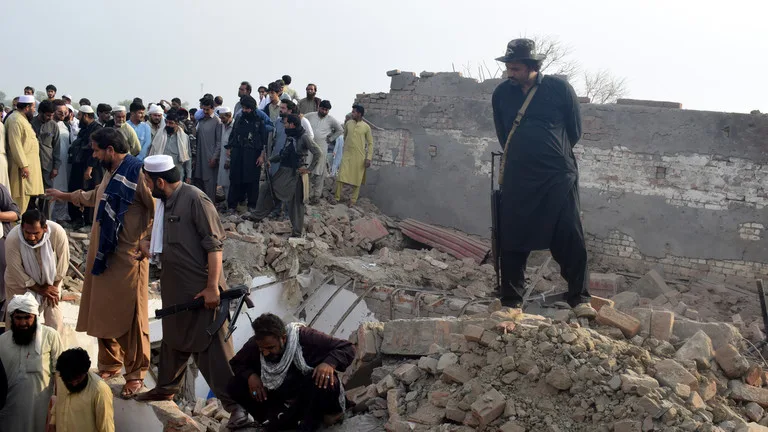
A suicide car bomb at a mosque near a police compound in Pakistan’s Khyber Pakhtunkhwa province killed at least 16 people, with conflicting reports citing 21 fatalities, including 5-16 police officers. The attack, which occurred during Friday prayers, has intensified concerns over escalating militant violence in the region, where security forces have struggled to contain attacks linked to Taliban-affiliated groups.
Discrepancies in Casualty Numbers
The attack’s death toll remains contested, with sources reporting 16 to 21 casualties. At least 57 to 78 people were injured, according to accounts from police and medical officials. The divergence in figures reflects varying reporting timelines and the challenges of verifying casualties in the immediate aftermath.
| Source | Casualties | Police Deaths | Injuries |
|---|---|---|---|
| globalvillagespace.com | 16 | 5 | Not specified |
| business-standard.com | 21 | 16 | 78 |
| yahoo.com | 21 | 15 | 70+ |
The attack targeted a mosque located near the old Police Lines in Kohat, a city in Khyber Pakhtunkhwa province. A vehicle laden with explosives rammed the compound’s gate, triggering an explosion that damaged the mosque’s exterior and left a crater. Security forces engaged attackers in a gunfight, killing six militants, including suicide bombers and snipers, according to police. The blast also damaged nearby buildings, with rescue teams working to clear rubble and assist the wounded.
Militant Activity and Regional Tensions
While no group has claimed responsibility, the attack aligns with a pattern of violence by militant groups in the region. The Pakistani Taliban (TTP) and a lesser-known faction, Ittehad ul Mujahideen Pakistan, have been active in Khyber Pakhtunkhwa. The latter, formed in 2025, claimed responsibility for the attack, according to police, though its credibility remains unverified. The TTP, which has targeted security forces in recent years, denied involvement, according to reports.
Pakistan’s government has repeatedly accused Afghanistan of harboring militants who conduct cross-border attacks. Kabul has denied these allegations, but tensions have escalated since 2021, with both nations reporting clashes along their shared border. The bombing in Kohat follows a surge in attacks, including a February mosque bombing in Islamabad that killed over 30 people and a March strike on a Kabul drug rehabilitation center that killed hundreds, according to Afghan officials.
Recent weeks have seen a spike in violence. In August, 14 people were killed in a suicide attack near a police station in Swat Valley, while a similar bombing in Bannu in May killed 15 police officers. The current attack underscores the challenges facing security forces, who have struggled to prevent attacks despite increased military operations in border regions.
Government Response and Unanswered Questions
Pakistan’s president and prime minister condemned the attack, vowing to combat “foreign-sponsored terrorists.” Provincial leaders also called for unity against militant groups, while hospital officials reported that many of the injured were in critical condition. Rescue teams and security forces remained at the scene, with traffic on the Kohat-Hangu Road suspended for safety.
The attack’s perpetrators and motives remain unclear. While the Ittehad ul Mujahideen Pakistan claimed responsibility, its affiliation with broader militant networks is unverified. The absence of a clear claim has raised questions about whether the attack was a rogue operation or part of a larger campaign. Additionally, the lack of transparency around the group’s activities complicates efforts to predict future threats.
Regional stability remains fragile, with cross-border accusations and military clashes complicating diplomatic efforts. The attack in Kohat highlights the risks of continued instability, as militants exploit porous borders and governance gaps to carry out attacks. The next critical development will be whether authorities can identify the attackers and prevent similar incidents, or if the violence will escalate further.
Frequently Asked Questions
Why are there conflicting casualty numbers in different reports?
Reports vary due to the timing of updates and the difficulty of verifying deaths in the immediate aftermath. Some sources cite initial counts of 16 fatalities, while others later reported 21, reflecting ongoing investigations and the inclusion of both police and civilian casualties.
Which groups are suspected of carrying out the attack?
No group has definitively claimed responsibility, but the attack aligns with tactics used by the Pakistani Taliban (TTP) and a smaller faction, Ittehad ul Mujahideen Pakistan, which claimed responsibility. However, the TTP denied involvement, and the motives of the attackers remain unconfirmed.
The attack in Kohat underscores the persistent threat of militant violence in Pakistan’s northwest, where security forces face a complex web of regional tensions and insurgent activity. As authorities investigate, the lack of a clear perpetrator and the escalation of attacks in recent months raise concerns about the region’s stability and the effectiveness of counterterrorism efforts.
How significant is this wire dispatch?
Cast your anonymous vote to register reader consensus across journalism and intelligence sectors.
Dateline Wire is dedicated to independent, evidence-backed reporting. This briefing was synthesized from primary source reporting, corroborated across independent newsrooms, and verified against our Editorial Standards.