INDIA bloc leaders meet Sharad Pawar and Stalin to lobby against delimitation bill
INDIA bloc leaders failed to convince DMK President M.K. Stalin and NCP chief Sharad Pawar to oppose the upcoming delimitation-linked constitutional amendment bill.
INDIA bloc leaders flew to Chennai and Mumbai on Sunday to lobby key regional allies against a controversial delimitation-linked constitutional amendment bill scheduled for Parliament on November 30, 2026. The most striking casualty of the outreach was the opposition's inability to sway DMK President M.K. Stalin, who refused to drop his support for the legislation despite a personal appeal from senior opposition figures.
The high-stakes diplomatic scramble highlights deep fractures within the opposition alliance just hours before the Centre introduces the legislation in the Lok Sabha. While Congress leaders frame the proposed expansion of the Lok Sabha as an existential threat to Indian federalism and southern political representation, regional power brokers are calculating their moves through the lens of state survival.
What changes and who is affected by the delimitation bill?
The proposed legislation is a fresh Constitution amendment bill designed to operationalize women's reservations by increasing the strength of the Lok Sabha and State legislative Assemblies by 50%. Under the plan, revised seat allocations and boundaries would remain frozen until 2051. Congress and other INDIA bloc parties argue that linking women's reservations to delimitation threatens democracy, enables partisan redrawing of constituencies, and adversely affects Scheduled Castes and Scheduled Tribes representation.
For southern states, the stakes are existential. M.K. Stalin argued that a delimitation exercise based on any census after 1971 would severely penalize Tamil Nadu and reduce its share of seats in the Lok Sabha. However, the DMK secured a commitment that Tamil Nadu's existing 7.18% share would not be reduced and that the proportion of parliamentary representation among states based on the 1971 Census would be maintained. Stalin defended his position by stating that supporting the bill is the only way to protect the state for the next 25 years.
If the Bill is defeated, Tamil Nadu will lose the minimum protection it has secured. Southern States, including Tamil Nadu, will be betrayed by the Delimitation Commission to be constituted in January 2027. No one can prevent it, and it will become inevitable. It is a constitutional provision. We do not have the political strength or a two-thirds majority in Parliament to change it
M.K. Stalin, DMK President, via The Hindu
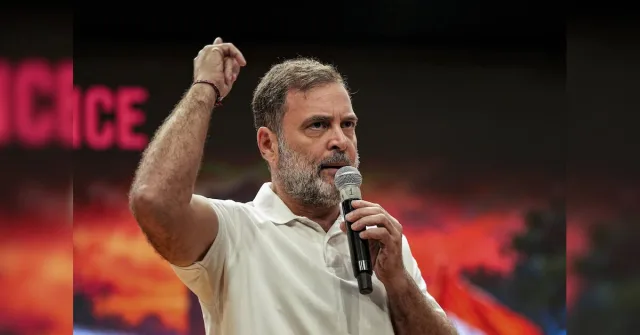
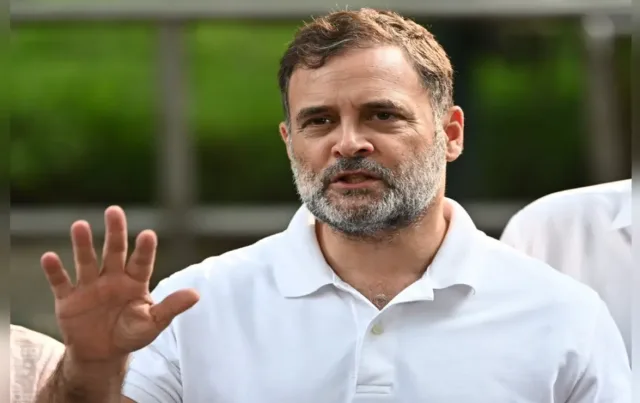
That reading puts the DMK at direct odds with Lok Sabha Leader of Opposition Rahul Gandhi. Gandhi warned that once the BJP reshapes the 850 seats, democracy in India is finished and a full-scale attack on Tamil culture and language will begin. Gandhi cited past delimitation exercises in Assam and Jammu and Kashmir as precedents for what he alleged was the ruling party's larger design to control southern states.
Why did the INDIA bloc outreach fail to convince Stalin and Pawar?
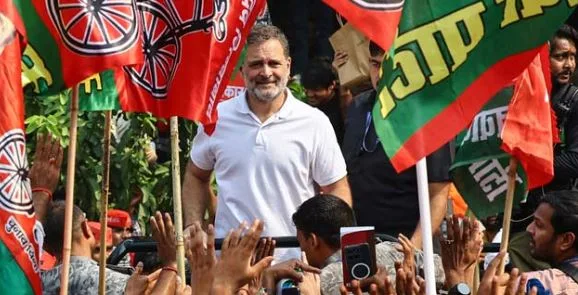
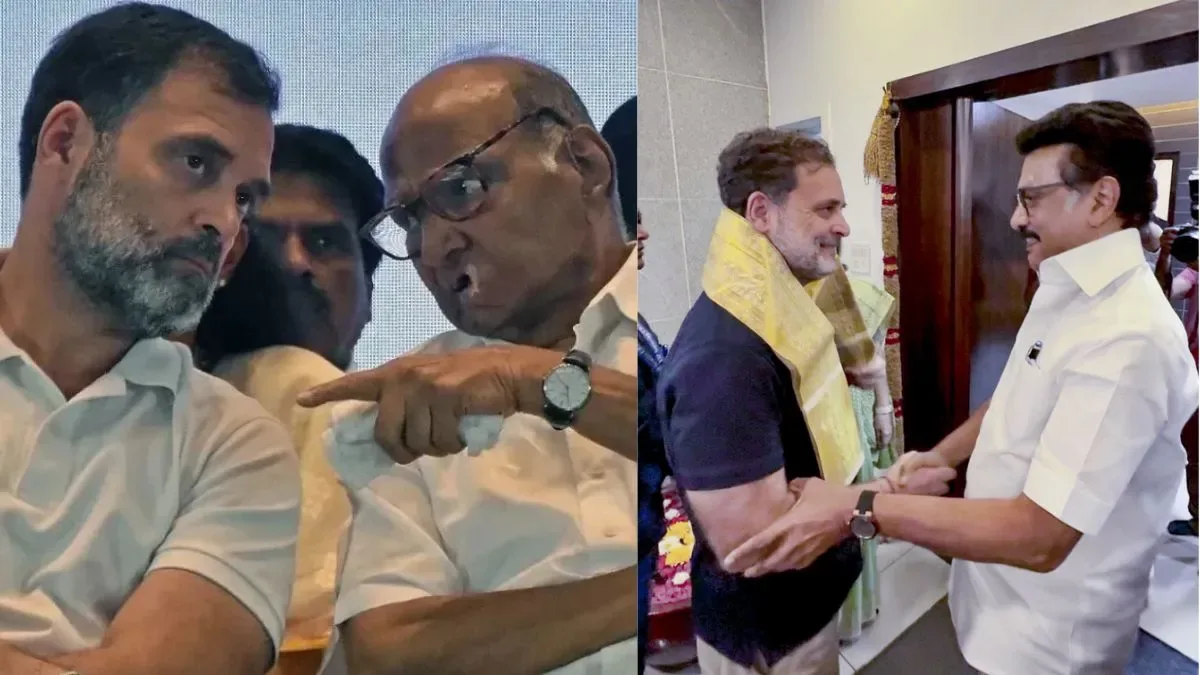
The opposition's failure in Chennai began when M.K. Stalin drew a hard line, asserting that his party's position is Tamil Nadu First. The DMK chief received the delegation warmly, hugging Rahul Gandhi and setting aside months of political friction. Yet that personal bonhomie did not translate into legislative alignment. Stalin maintained that the INDIA bloc leaders had offered no alternative solution to protect southern interests against an inevitable constitutional process.
The delegation then flew to Mumbai to visit 85-year-old Nationalist Congress Party (Sharadchandra Pawar) chief Sharad Pawar at Breach Candy Hospital. Pawar has been recuperating after suffering from dehydration. Congress leaders Rahul Gandhi, Mallikarjun Kharge, Trinamool Chief Mamata Banerjee, CPI(M) general secretary M.A. Baby, and several chief ministers including Karnataka's D.K. Shivakumar and Telangana's A. Revanth Reddy attended the meeting.
According to a leader present at the hospital, Pawar listened intently and stated that he would speak with his party MPs before deciding. NCP (SP) has eight Lok Sabha members and has not officially announced its stance, though it appears inclined to support the legislation. Supriya Sule, the party's working president and Pawar's daughter, was not present during the visit and indicated support for the bill previously, prompting her nephew and party MLA Rohit Pawar to write an open letter urging her to reconsider.
Who holds the numbers in Parliament?
The arithmetic in the Lok Sabha explains why the ruling government is pressing forward with confidence. Passing a constitutional amendment requires a two-thirds majority. If all 538 members participate — excluding Speaker Om Birla and suspended Trinamool Congress MP Kalyan Banerjee — the threshold stands at 359 votes.
The BJP-led Centre claims the support of 371 Lok Sabha members, placing it comfortably above the required threshold. A detailed breakdown of potential tallies shows how fragile the opposition's blocking coalition is:
- NDA baseline support and allies
- 22 DMK MPs supporting the government to protect state safeguards
- 20 Trinamool Congress rebels
- 4 YSR Congress Party members
- 1 Shiromani Akali Dal MP
- 6 Shiv Sena (UBT) MPs who defected to the Eknath Shinde-led faction
- 8 NCP (SP) MPs whose stance remains unconfirmed
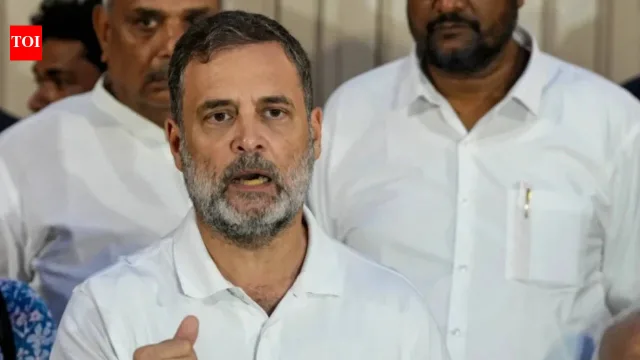
If Sharad Pawar's eight MPs join the ruling side, the potential tally reaches 353, leaving the government just six votes short of the strict two-thirds mark, even before counting official government claims of 371 supporters. Recognizing the uphill battle, Rahul Gandhi offered a cryptic assessment of the situation upon leaving Mumbai, telling reporters The fight is on. It's all good.
What happens when Parliament convenes?
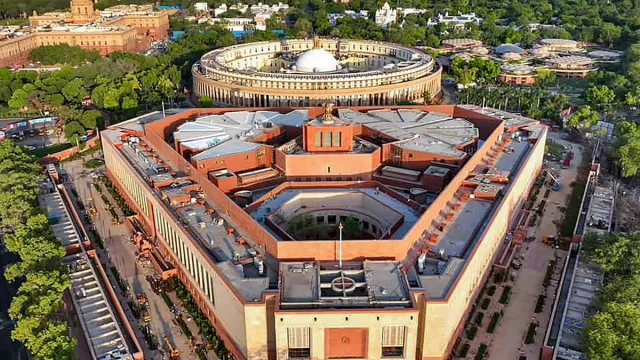
The special session of Parliament begins on Monday, November 30, 2026. The Union government is scheduled to introduce the Constitution (132nd Amendment) Bill and the related delimitation legislation directly into the Lok Sabha on that day.
Observers will watch for the official voting tallies, the final stance announced by Sharad Pawar's parliamentary party, and whether internal party friction, such as Rohit Pawar's open letter against Supriya Sule's position, forces any last-minute abstentions. The parliamentary debate will test the cohesion of regional alliances as southern parties weigh national opposition unity against localized territorial protection.