Veteran Indian actor Nana Patekar dies at 75
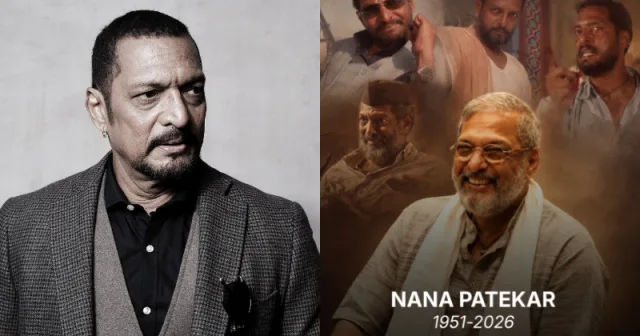
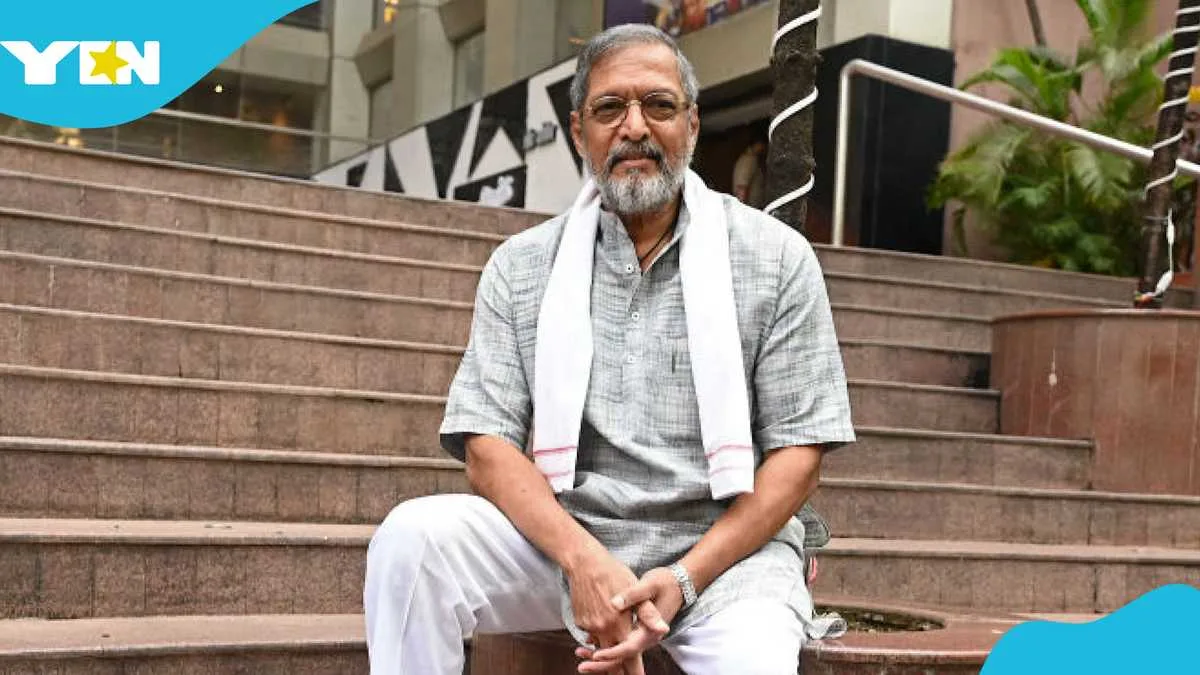
Veteran Indian actor Nana Patekar has died at the age of 75 following a cardiac arrest at his residence in Goa.
Veteran Indian actor Nana Patekar dies at 75
Nana Patekar remembered for intense five-decade career following death at 75
Veteran Indian actor and filmmaker Nana Patekar, one of the most distinctive and celebrated figures in Hindi and Marathi cinema, died at the age of 75 on Thursday at his home in the western state of Goa. Patekar died of a suspected cardiac arrest, the Press Trust of India news agency reported, citing a doctor at the hospital where he was pronounced dead. Discovered unconscious in the early hours of the morning, he was rushed to Manipal Hospital, where medical staff made exhaustive efforts to revive him. Despite 45 minutes of continuous CPR, he could not be revived, Dr Shekhar Salkar of Manipal Hospital told the ANI news agency, confirming that the actor was declared dead. His son, Malhar Patekar, confirmed the passing to BBC Marathi, stating that he died. That sudden loss triggered a nationwide wave of grief from political leaders, co-stars, and admirers. The Maharashtra government announced that his funeral will take place later in the evening with full state honours at his farmhouse in the western Indian city of Pune.
That sudden loss closes a five-decade career defined by raw intensity, monumental versatility, and fierce individuality. Born in Maharashtra in 1951, he built his reputation on characters that brought realism and gravity to the screen, known for intense performances and roles that often portrayed complex or unconventional characters. Before his film career began with the 1978 film Gaman, Patekar spent years honing his craft in theatre, mastering the precise dialogue delivery and commanding stage presence that later became his cinematic signature. He remained active on stage throughout his professional life, starring in acclaimed productions such as Purush and Hamidabai Chi Kothi. Across a career spanning drama, comedy, and villainous turns, he won three National Film Awards for Parinda, Krantiveer, and Agni Sakshi, alongside a Padma Shri. His work also included international recognition through filmmaker Mira Nair's Oscar-nominated Salaam Bombay!, and he shared screen space with major stars including Amitabh Bachchan and Shah Rukh Khan.
President Murmu and Prime Minister Modi mourn loss
Prime Minister Narendra Modi led national tributes on X, writing that Patekar portrayed characters that would remain etched in the memory of generations and noting that his passing had left a vast void in the artistic world
. Modi praised Patekar's versatility and outspoken personality, highlighting his intensity, individuality and unmistakable presence as an actor. President Droupadi Murmu also joined in mourning the loss. Defence Minister Rajnath Singh called his death an irreparable loss, describing him not merely as an actor but as an institution in himself. Maharashtra Culture Minister Ashish Shelar announced the state funeral in honor of his monumental contributions to cinema and culture.
Co-stars and contemporaries shared deeply personal grief across social media platforms. Akshay Kumar, who worked with Patekar in Welcome, wrote He was one of those rare actors who never needed to do too much to make you sit up and watch. That voice, that intensity, that honesty in every performance… he was completely his own
, adding the late star was truly one of a kind
. Riteish Deshmukh expressed that he was left speechless, noting that his long-held wish to work with Patekar in a Marathi film would now remain unfulfilled. Telugu star Jr NTR observed that Patekar's performances never felt like acting, but rather like life unfolding on screen. Suniel Shetty remembered him as fiercely honest and deeply rooted, while Kangana Ranaut, Urmila Matondkar, Kiara Advani, and Sidharth Malhotra also shared heartfelt tributes. Film trade analyst Komal Nahta told the BBC, He had a distinctive style of working and how he approached characters. As a person, he was outspoken and difficult to get along with but directors would still want to work with him because he was simply a fantastic actor.
Video: Veteran Actor Nana Patekar Dies At 75 After Suffering Cardiac Arrest #shorts — Times Now (YouTube)
Cinematic milestones from Parinda to Welcome
Patekar transitioned from smaller roles to household-name status with his portrayal of the volatile gangster Anna in the 1989 film Parinda, a performance that earned him both a Filmfare Award and his first National Film Award. He followed this with a series of memorable and varied characters through the 1990s, including Major Chauhan in Prahaar — a film he also directed, the villainous Majid Khan in Angaar, and the patriotic firebrand in Tirangaa. His portrayal of Pratap Narayan Tilak in the 1994 action-crime drama Krantiveer brought him the National Film Award for Best Actor, anchored by a searing courtroom monologue from the gallows addressing societal apathy and political corruption that continues to go viral among fans. Famous dialogues from his films, delivered in his inimitable raspy voice, were quoted in school corridors and tea stalls, inspiring professional comedians to imitate his style.
Demonstrating immense range, Patekar defied critics who believed loud characters were his mainstay by delivering a deeply restrained turn as a deaf and mute father in Khamoshi, playing an astute politician in Prakash Jha's 2010 film Rajneeti, and showcasing sharp comedic timing as Uday Shetty in the popular comedy Welcome. In his later years, he appeared in films including Housefull 5 and O' Romeo. His deep association with the Indian Army during the 1999 Kargil War saw him obtain special permission to serve alongside troops near the Line of Control after undergoing extensive military training for Prahaar, during which he lost around 20 kg.
Family life and personal tragedies
Patekar is survived by his wife, Neelkanthi, and son Malhar. Nana and Neelkanthi went through many ups and downs through their marriage, and while they lived separately for most of their lives, they never got divorced. In an earlier interview with The Lallantop, Nana shared that he and Neelkanthi met during the play Jaat Na Pucho Sadhu Ki, where she was also working as an actor. At the time, Neelkanthi had a day job as a bank officer and made much more money than him.
She was working as an officer in a bank. I would get paid Rs 50 per show, and she had a salary of Rs 2500. I could only make Rs 750 after doing 15-20 shows,
he recalled, noting that it was her financial and moral support that encouraged him to pursue acting.
She told me that if you want to pursue this as a career... I am already making money so we have money coming in for the family. I am very grateful to her. I could pursue this profession only because of her. We didn’t know at that time if I would be successful or not,
he said.
A few years later, Neelkanthi gave up her acting career to take care of the family. By this time, Nana and Neelkanthi had started living separately, with her living alongside Nana's mother and their son Malhar.
The couple also witnessed the tragic death of their older son Durvasa, who passed away when he was just two and a half years old. Durvasa was born with a cleft palate and had difficulty seeing through one eye. Reflecting on that period, Nana shared, The first thought that ran through my mind when I’d see him like this was, 'What will people think about me, that my son looks like this'. Imagine what a terrible man I am. My first worry was what people would say about me, not him.
He died at the age of two-and-a-half, but he taught me so much. He’s the triggering point. It happens...
Nana said, adding that he never wallowed in grief. I’ve always had a chin-up attitude. I don’t cry. I cry only in the movies, and I do that for money.
Following the death of his son, Nana started smoking excessively, consuming about 60 cigarettes a day and even smoking while bathing. He recalled that no one would sit in his car because of the foul smell, though he noted he never drank alcohol much.
Activism, philanthropy, and public scrutiny
Beyond the screen, Patekar maintained a robust public life defined by vocal activism, outspoken criticism of government policies, and extensive philanthropic work. He was direct and unapologetic when criticizing ministers and their policies publicly. Issues related to farmers were particularly close to his heart. In 2015, he co-founded the Naam Foundation alongside actor Makarand Anaspure, channeling his efforts into farmer welfare and water conservation across the state. Former civil servant Tukaram Mundhe, a close friend who had spoken to the actor just eight days prior, revealed that Patekar's final words to him were Love you, Bala
.
Patekar’s public life also navigated periods of intense scrutiny. In 2018, actor Tanushree Dutta accused him of sexual harassment over an alleged incident on a film set a decade earlier, making his case one of the catalysts for India's #MeToo movement. Patekar consistently denied the allegations, and in 2019, police cleared him of the charges after stating they had not found sufficient evidence against him.
Updated 3 times since publication; last update 21 November 2026, 14:24.