Canadian poet Anne Carson wins 2026 Nobel Prize in Literature
The Swedish Academy has awarded the 2026 Nobel Prize in Literature to Canadian writer Anne Carson for her genre-defying and inventive oeuvre.
- Headline: Canadian poet Anne Carson wins 2026 Nobel Prize in Literature
- Dispatch Summary: The Swedish Academy has awarded the 2026 Nobel Prize in Literature to Canadian writer Anne Carson for her genre-defying and inventive oeuvre.
- Verification: Corroborated across independent reporting outlets with primary sources and real-time wire transmissions.
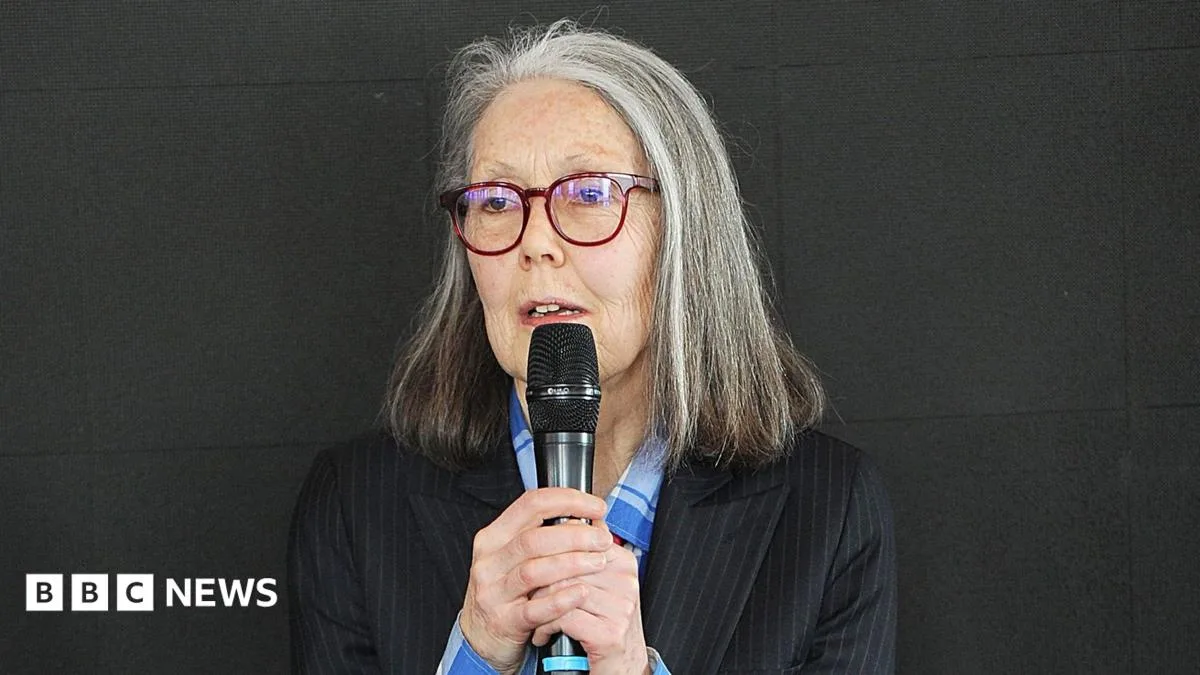
Canadian poet, essayist, and classicist Anne Carson will formally receive her 12 million Swedish kronor prize at the Nobel Prize ceremony in Stockholm on December 10, 2026. The Swedish Academy announced the award in Stockholm on Thursday, October 8, 2026, citing the 76-year-old author for her bold and inventive oeuvre that, in playful dialogue with the classical tradition, has created new forms for contemporary literature.
That December date sets the timeline for the international literary community as it processes the selection of Canada's newest laureate, who succeeds Hungarian novelist László Krasznahorkai, the 2025 winner.
A Bold Oeuvre Rooted in Classical Dialogue
Born in Toronto in 1950, Carson studied Classics at the University of Toronto, where she earned her bachelor's, master's, and doctoral degrees, before spending more than 30 years working as a professor of classics at several North American universities while publishing more than 20 books of poetry, essays, and translations of ancient Greek literature. Her work often blends verse, prose, dialogue, and translation in a genre-defying mix that ranges from opera libretti to literary criticism and verse novels, including notable works such as Nox and Float.
Ingrid Carlberg, permanent secretary of the Swedish Academy, reached Carson by telephone in Iceland — where she and her husband, Robert Currie, were granted citizenship in 2022 — shortly before the public announcement on Thursday, October 8, 2026. She had time to tell me was that she is, for the moment, in Iceland, where she is listening to the wind,
Carlberg said, adding that Carson was very taken by surprise but very happy. Anders Olsson, chair of the literature committee, noted that almost all her literary production has centred upon the intersection between the philologist's obsession with words and the poet's desire for new meaning. Olsson added that Carson's juxtaposition of influences ranging from the ancient Greeks to John Keats, Virginia Woolf, and Emily Brontë leads to playful and ironic works that move not only between classical and modern poetry but also between different genres and artforms.
Carson once described boredom as her arch-enemy, a state she confronts with drastic humor and wit. Her major breakthrough arrived in 1998 with Autobiography of Red, a queer coming-of-age verse novel that reimagines a fragment by the ancient Greek poet Stesichorus. Her style is further exemplified in works such as Eros the Bittersweet, a look at the pleasure and pain of desire in ancient Greek literature; Men in the Off Hours, a collection of poetry and prose that won Canada's Griffin Prize for poetry in 2001; The Beauty of the Husband: A Fictional Essay in 29 Tangos, published in 2001, which tells of a cutting and sardonic row with a deceitful husband across twenty-nine episodes opening with lines by John Keats; and Norma Jeane Baker of Troy from 2019, a performance piece which mixes the stories of Helen of Troy in Euripides' play Helen and Marilyn Monroe. In 2001, she made history as the first woman to win the T.S. Eliot Prize for The Beauty of the Husband, alongside receiving Guggenheim and MacArthur fellowships and publishing works such as Plainwater.
Carson also has translated works of classical Greek literature that, the Swedish Academy said, may be regarded as independent works in their own right. These include If Not, Winter, based on poem fragments by Sappho; Sophocles' tragic plays Electra and Antigone; and Euripides's Bakkhai.
Navigating the Bookies' Favorites and Academy Patterns
The path to the 2026 prize involved intense speculation across the literary industry. Ladbrokes had listed Carson and Can Xue as joint favorites at 10/1 odds, positioning them ahead of Haruki Murakami at 14/1, and Gerald Murnane and Thomas Pynchon at 16/1, with figures such as Salman Rushdie, Margaret Atwood, and Jamaica Kincaid sitting at longer odds. Can Xue, a 73-year-old Chinese author, had spent multiple years topping runner and rider lists, creating what industry observers talk of as the Murakami-style perpetual frontrunner pattern.
Yet the Swedish Academy's internal composition often signals its direction. The eighteen life members of the Academy include literary historians, lawyers, linguists, and journalists. Notably, the May 2026 election of Anna Hallberg, a new member who has published nine collections of verse and been hailed as one of contemporary Swedish poetry's most uncompromising voices, helped fuel strong expectations among Swedish critics that a poet would take this year's prize. The last laureate known foremost for a career in poetry was Louise Glück in 2020.
The Evolution of the World's Most Prestigious Literary Accolade
- 1901: The Nobel Prize in literature begins its annual awards cycle.
- 1910: Leo Tolstoy dies after being nominated 16 times for the literature prize and three times for the peace prize.
- 1950: Anne Carson is born in Toronto, Canada.
- 1998: Carson publishes her breakthrough verse novel, Autobiography of Red.
- 2001: Carson becomes the first woman to win the T.S. Eliot Prize for The Beauty of the Husband.
- 2015: Svetlana Alexievich wins the prize as Ladbrokes' clear favorite at 3/1 odds.
- 2020: Louise Glück becomes the last Nobel literature laureate known foremost for poetry.
- 2025: László Krasznahorkai receives the Nobel Prize in Literature.
- May 2026: Anna Hallberg is elected as a new member of the Swedish Academy.
- October 8, 2026: Anne Carson is announced as the 2026 Nobel Prize in Literature laureate.
- December 10, 2026: Anne Carson is scheduled to formally receive the honour at the Nobel Prize ceremony in Stockholm.
The broader history of the prize reveals an award that often divides opinion among book lovers. The Academy has been lambasted for ignoring some of the literary titans of the last 120 years such as Leo Tolstoy, Virginia Woolf, and Jorge Luis Borges, criticized for snubbing US authors, though it gave the prize to singer-songwriter Bob Dylan in 2016, and accused of being too obscure in its choices. Conversely, defenders say the Academy has made popular picks, such as Colombia's Gabriel Garcia Marquez in 1982 and Doris Lessing in 2007, arguing that part of its task is to highlight lesser known literary traditions and encourage readers to broaden their horizons. Over the preceding two decades, the Academy awarded the prize evenly across gender lines with eight women and 12 men alternating since 2017, alongside a geographic distribution of 10 winners from western Europe and 10 from the rest of the world.
While critics debated whether the Academy would favor an accessible populist voice following László Krasznahorkai's dystopian victory in 2025, where the Hungarian writer won for work judges said upholds the power of art in the midst of apocalyptic terror, the selection of Carson reaffirms the value of intellectually demanding, hybrid scholarship.
Publisher Triumphs and Industry Standing
The announcement also highlights the remarkable ascendance of independent publishing houses in the global literary ecosystem. London-based Fitzcarraldo Editions has punched significantly above its weight since launching in 2014, building a catalogue of Nobel laureates that includes Svetlana Alexievich in 2015, Olga Tokarczuk in 2018, Annie Ernaux in 2022, Jon Fosse in 2023, and Elfriede Jelinek in 2004. While major conglomerates often chase commercial accessibility, indie presses have repeatedly captured the English-language rights to the world's most academically revered authors just years before the Swedish Academy makes its call.
That leaves commercial prognosticators to reconsider how the Academy weighs literary experimentation against mainstream renown. While some critics in Swedish broadsheets argued for a widely recognized figure in the mold of Bob Dylan or Kazuo Ishiguro, the Academy returned firmly to the domain of high literary art. Established in the will of Swedish dynamite inventor and businessman Alfred Nobel, the prizes for achievements in literature, science, and peace have been awarded since 1901.
Carson's victory cements a lifetime of crossing boundaries between poetry, fiction, and classical translation, ensuring that her wind-swept reflection in Iceland marks a new chapter for contemporary literature. According to an official post on X from the Nobel Prize account, the formal announcements and international celebrations will continue to unfold as the literary community processes the selection of Canada's newest Nobel laureate on December 10, 2026.
Updated 3 times since publication; last update 8 October 2026, 15:42.